Onyx jewellery: a stone brimming with intensity and personality
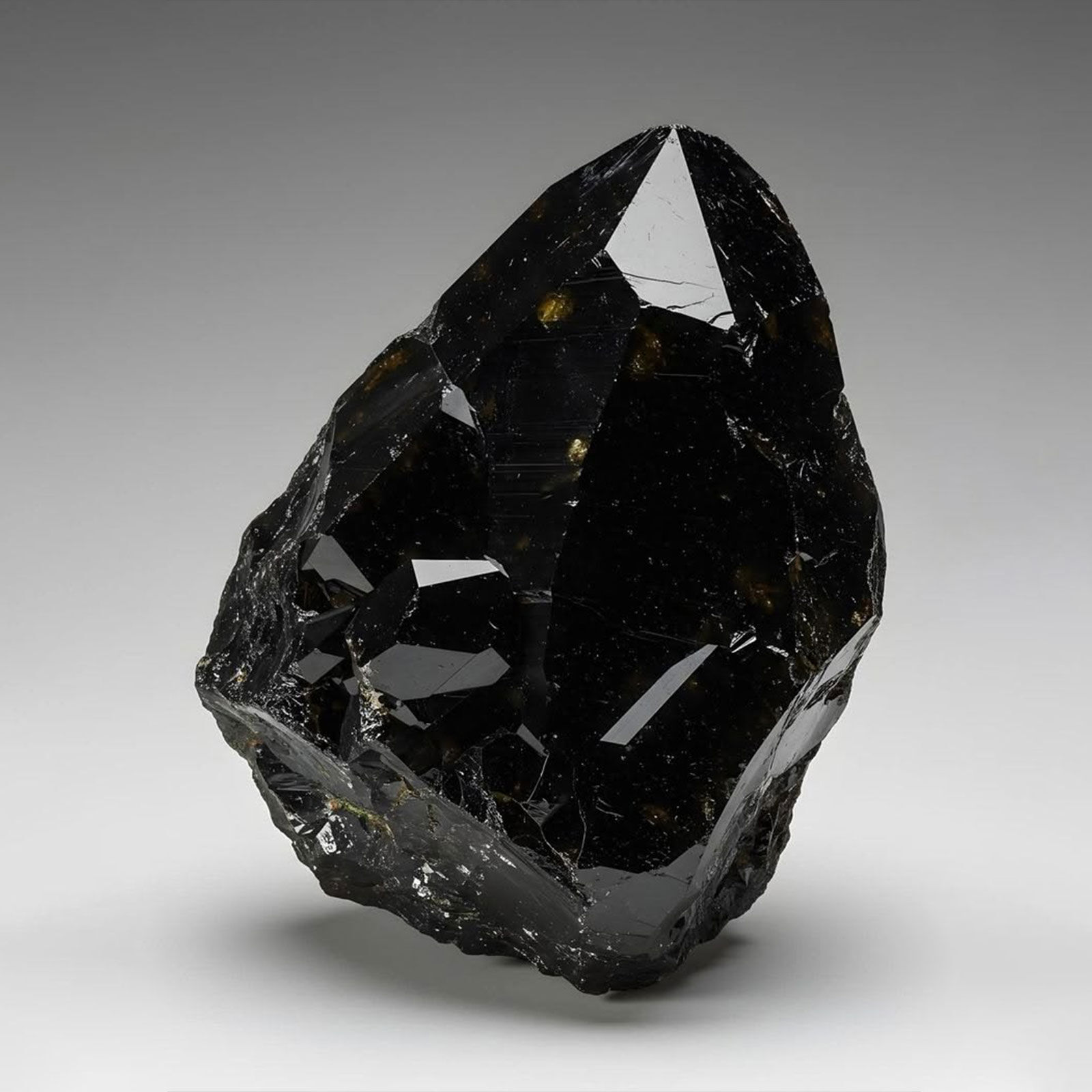
Onyx is one of the most magnetic and recognisable stones in the world of jewellery, capable of conveying strength, elegance and mystery in a single glimpse. Best known in its black variant, this stone actually forms a wide and multifaceted family of shades, ranging from deep green to milky white, through to the warm bands of sardonyx.
Dancing on the border between light and shadow, its ancient structure encapsulates sculpted contrasts.
What is onyx and where does it form?
Onyx belongs to the large chalcedony family: microcrystalline varieties of quartz with the chemical formula SiO2, characterised by a very dense and compact internal structure (called cryptocrystalline), formed by countless closely intertwined crystalline fibres, which are invisible to the naked eye.
This very microscopic structure gives the stone its opaque or slightly translucent appearance, setting it apart from other clear varieties of quartz.
On the Mohs mineral hardness scale, it is rated between 6.5 and 7. It is therefore a solid and durable stone, suitable for everyday use, although it does deserve the same level of care as other semi-precious stones: it must be protected from impacts and from direct contact with harder stones.
How it is formed: Onyx is born inside cavities of volcanic rocks, where silica-rich solutions are slowly deposited, layer by layer, during very long geological processes. This progressive deposition forms its characteristic structure of parallel bands, often of different colours, which makes each stone completely unique and unrepeatable.
The most significant deposits are found in Brazil, India, Uruguay, Madagascar and the United States, where the geological conditions favour the formation of particularly compact and intensely coloured specimens.
Black is not the only colour: the many shades of onyx
How many colours of onyx are there? A lot more than you might think.
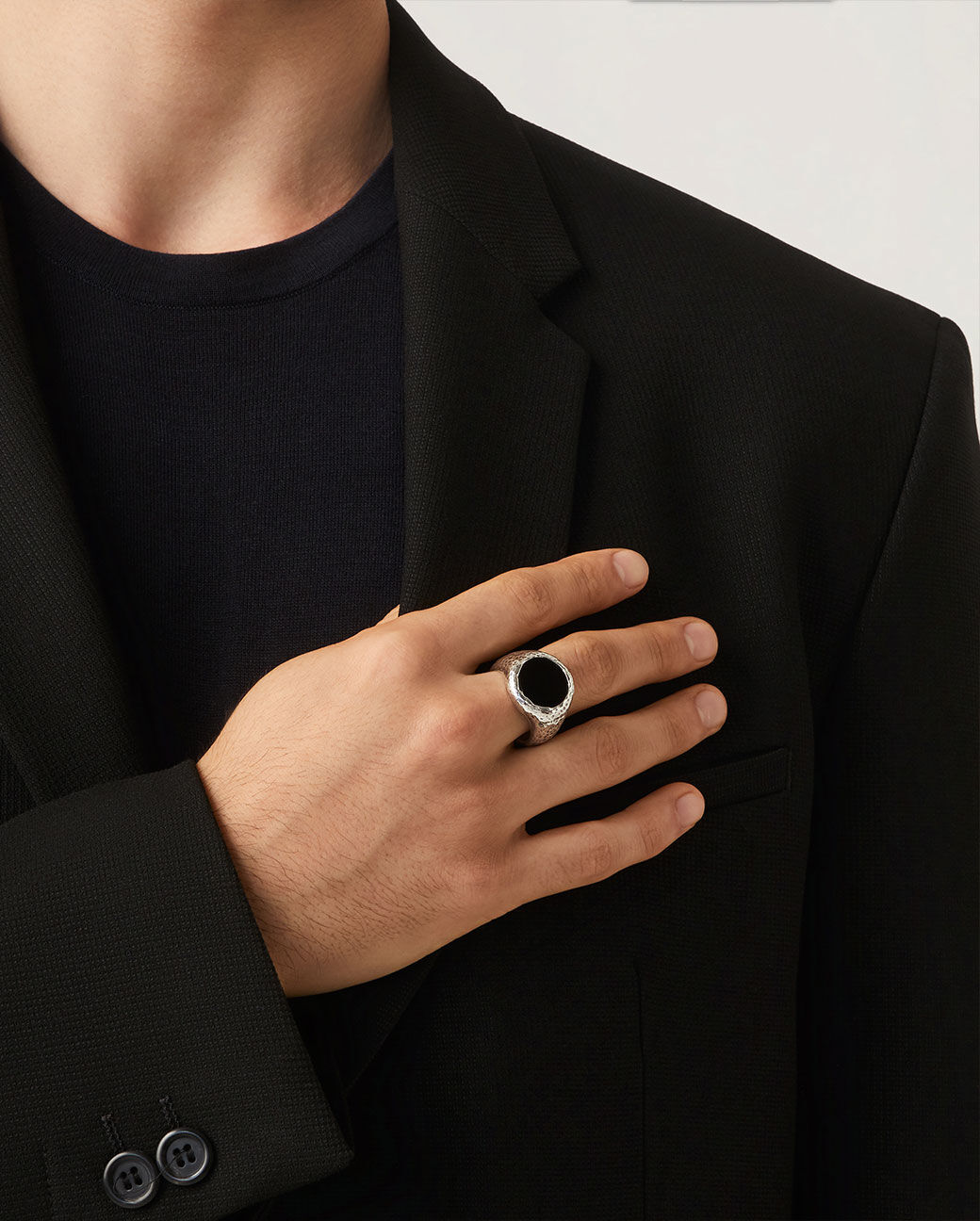
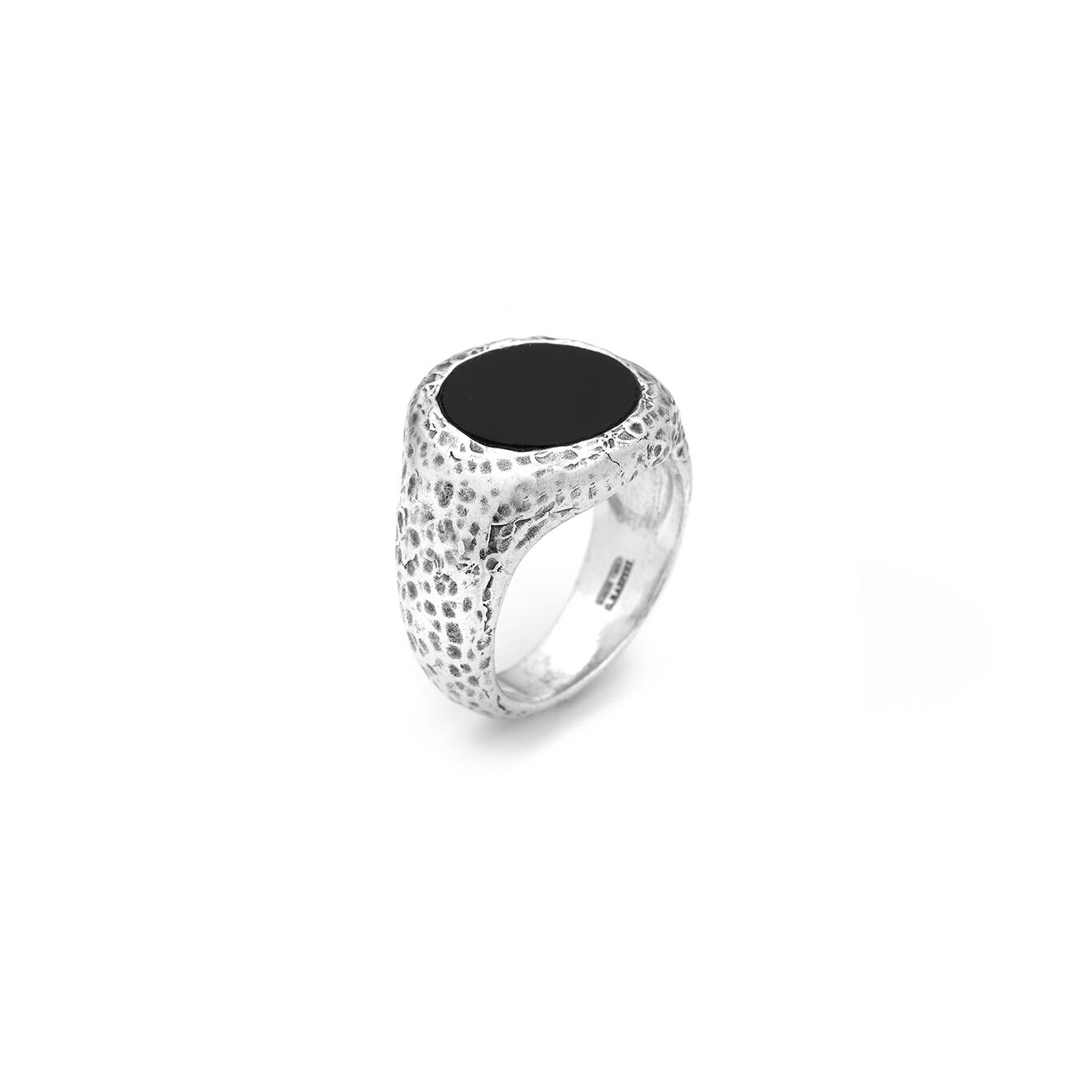
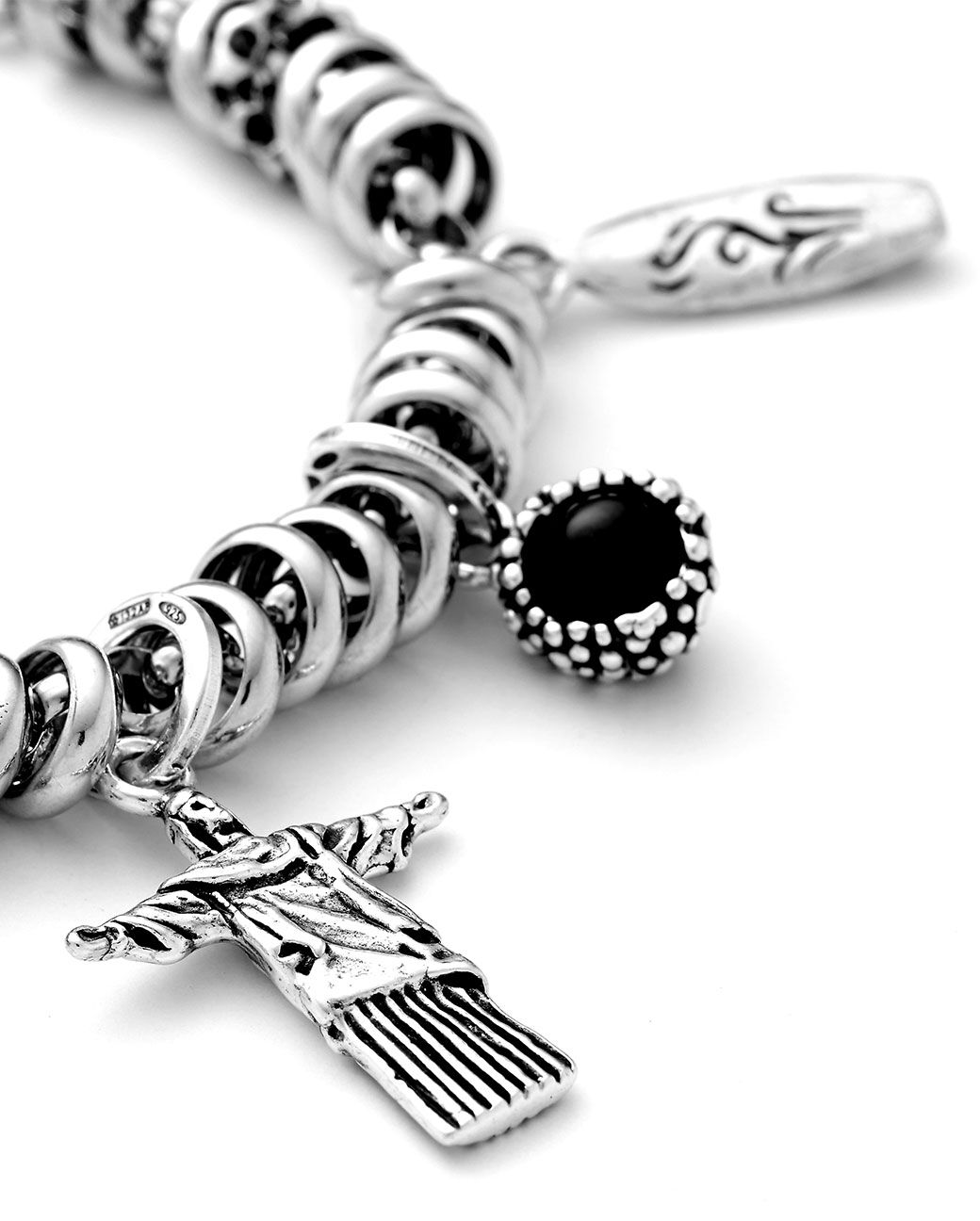
- Black onyx: The most famous and sought-after variety is undoubtedly black onyx, known for its intense and uniform colour. It often boasts a glassy shine, which makes it perfect for minimalist and contemporary designs.
- White onyx: with light and milky-pearl tones, it is ideal for people in search of a more delicate touch of light.
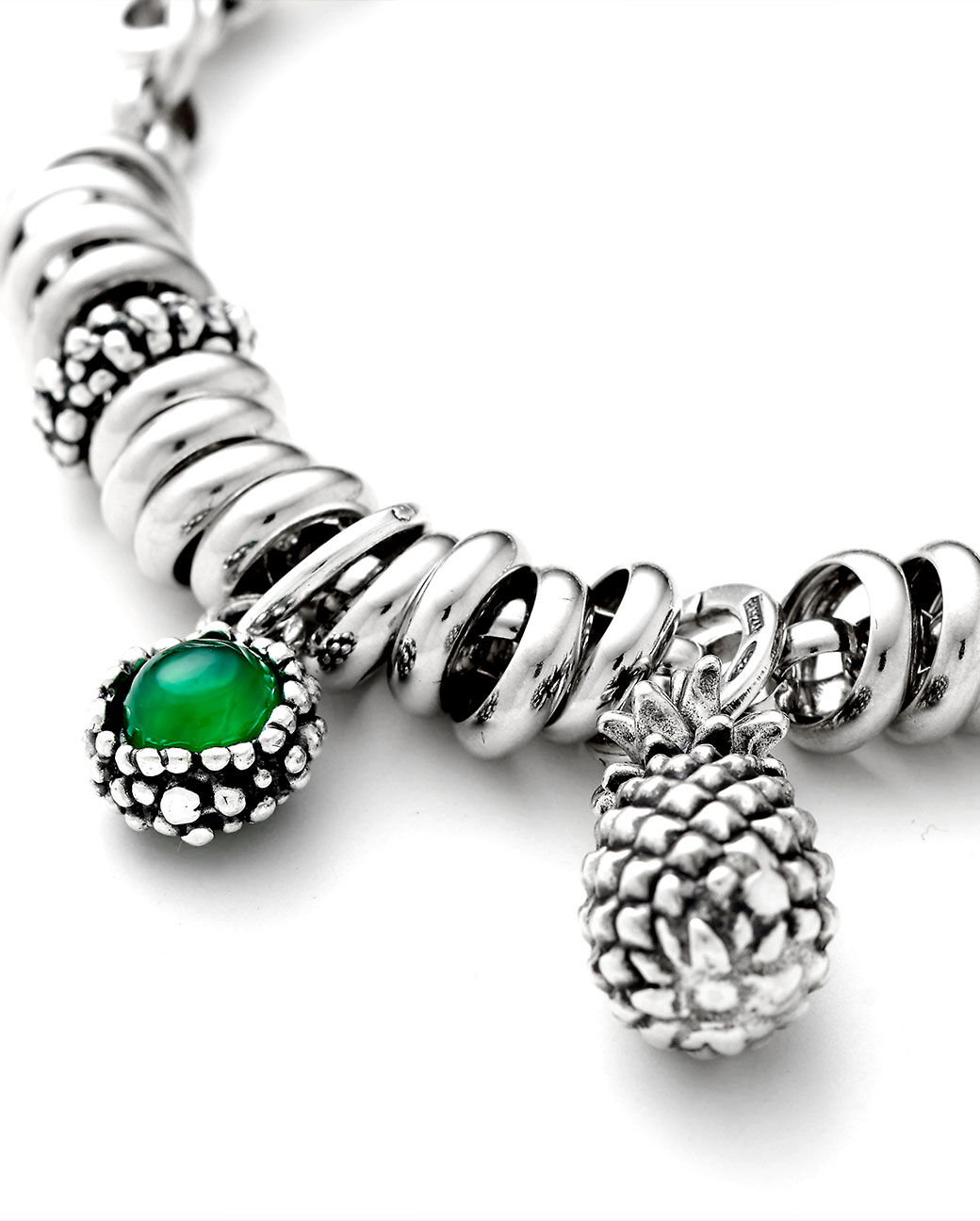
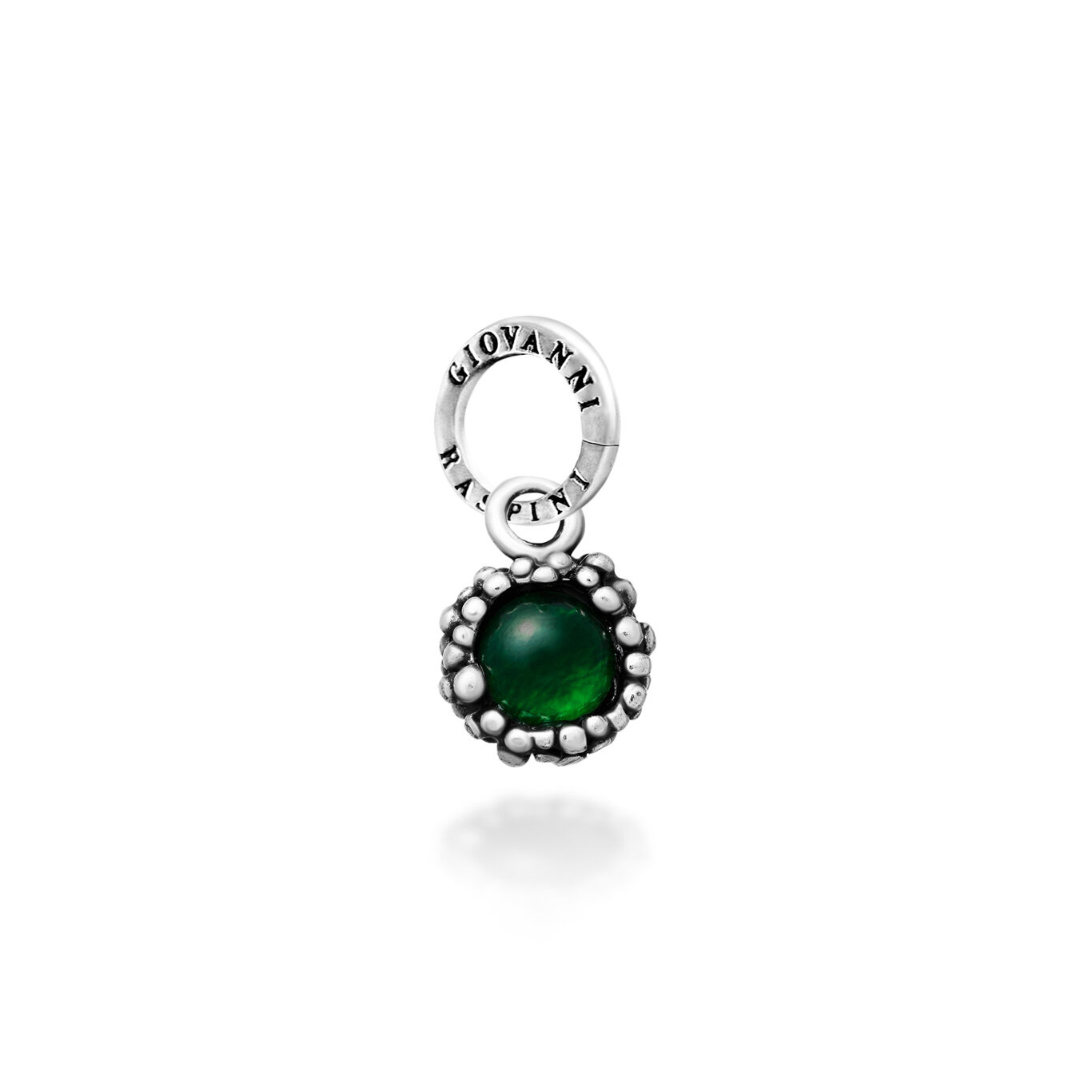
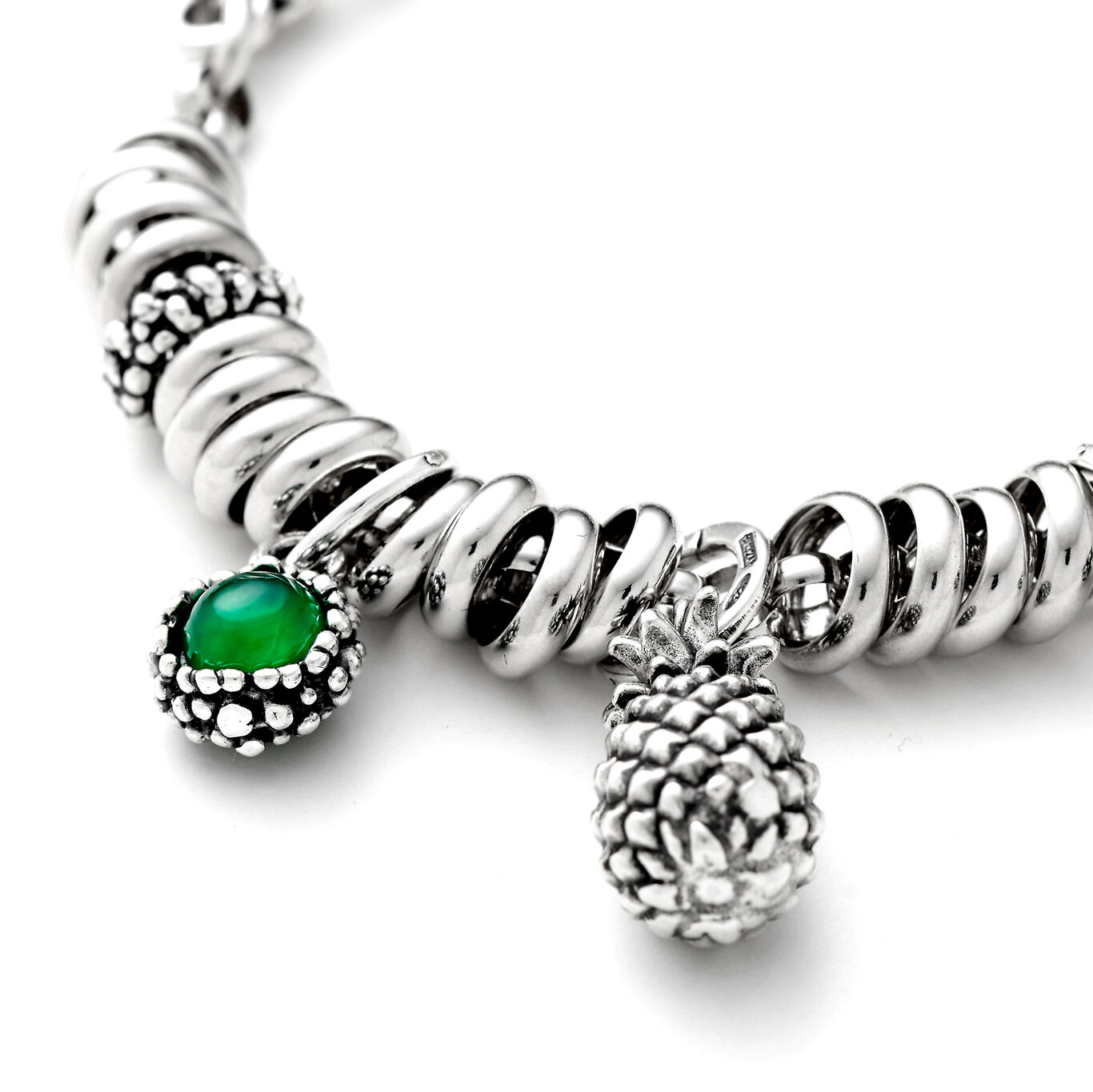
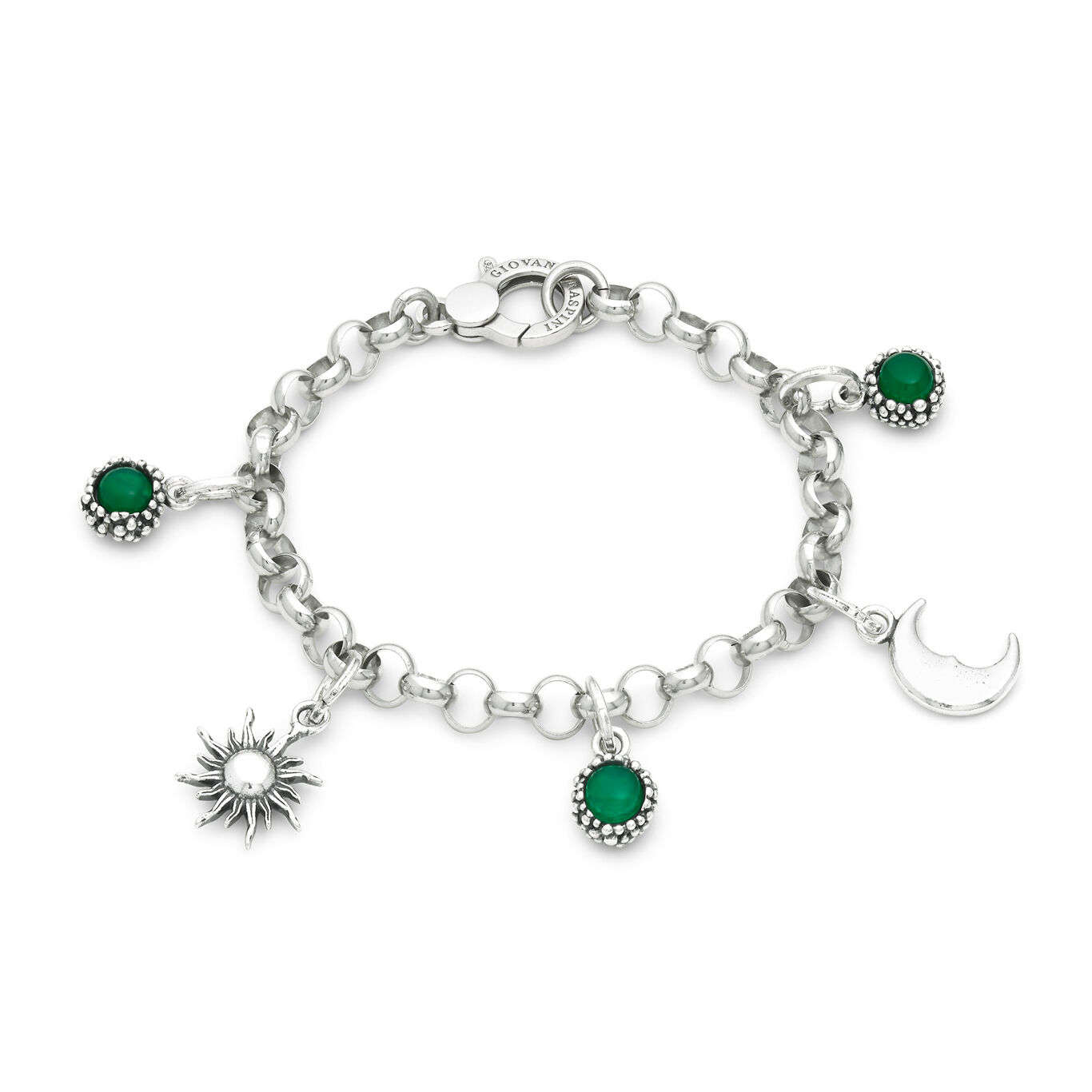
- Green onyx: with deep hues reminiscent of moss or jade, it can infuse jewellery with a natural and surprising character.
- Sardonyx: characterised by alternating reddish-brown and white bands, this variant has ranked among the most popular since antiquity.
The meaning of onyx: between myth and history
The very name "onyx" is the echo of a legend. In Greek, onyx actually means "nail": according to the myth, Cupid cut the nails of the goddess Venus with the tip of an arrow while she slept; the Fates, in order to prevent anything divine from being lost, turned them into stone.
Beyond the myth, onyx is a stone imbued with ancient and powerful meaning, long associated with inner strength and protection.
In ancient Rome, it was carved into seals and cameos: the legionaries wore it as a talisman of courage before battles, using it to channel bravery and determination.
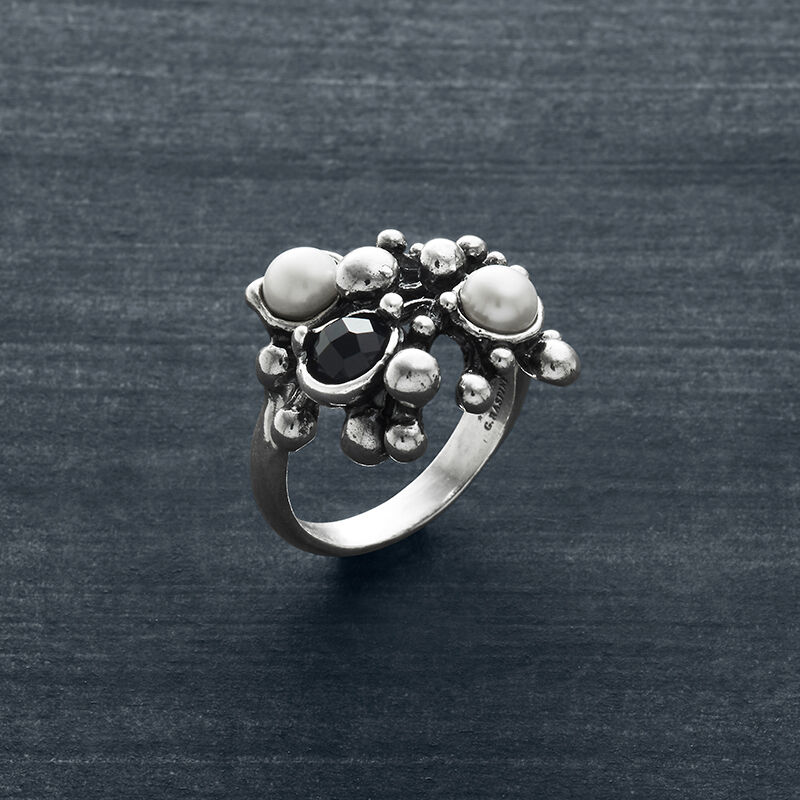
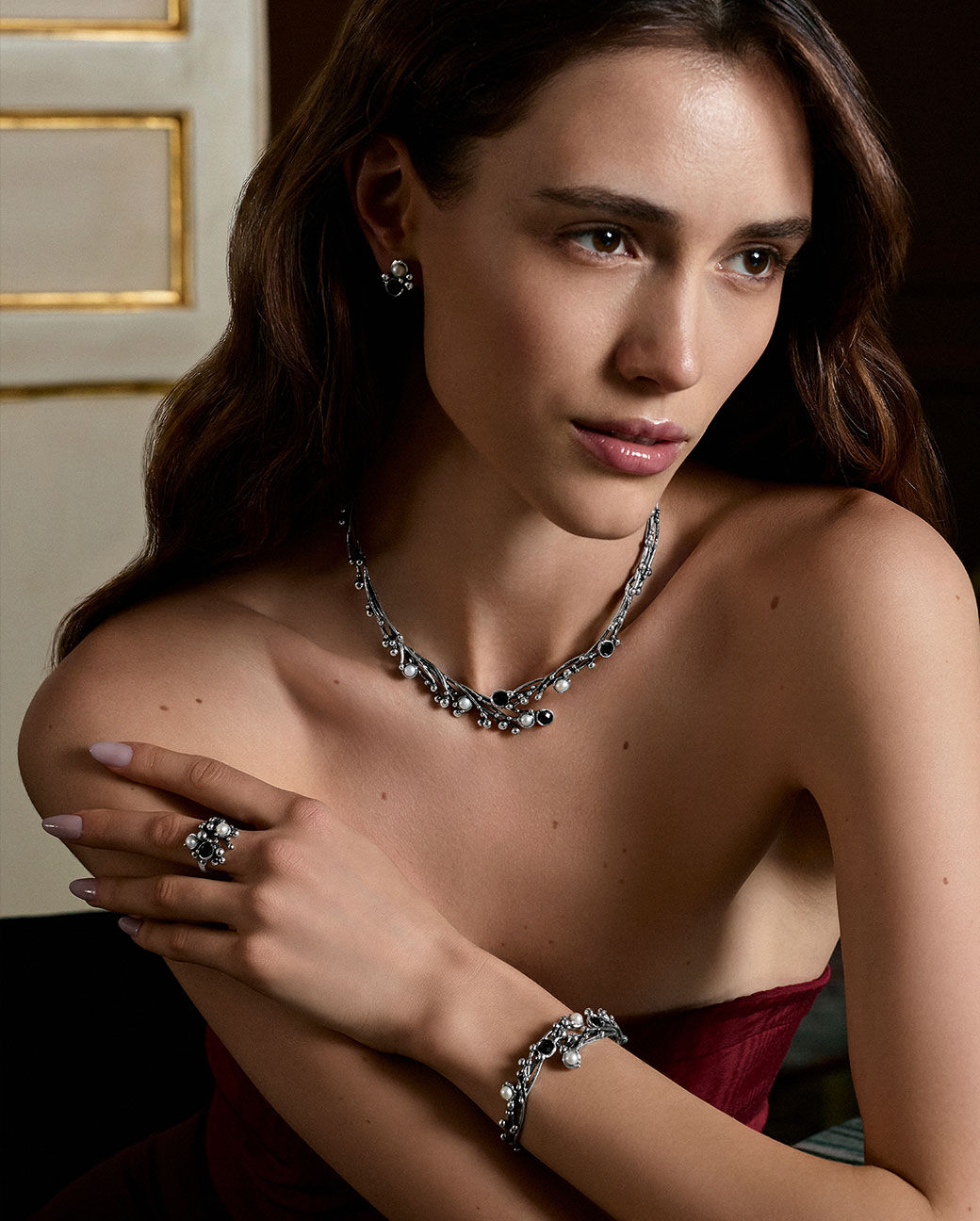
Over time, black onyx has also become a symbol of bold yet serene elegance, conveying a constant dialogue between light and shadow. Unsurprisingly, many pieces of jewellery play with this contrast today: the intense black of the stone stands out again light flashes of silver, striking a perfect balance between strength and refinement.

Onyx jewellery: how to choose and wear your best pieces
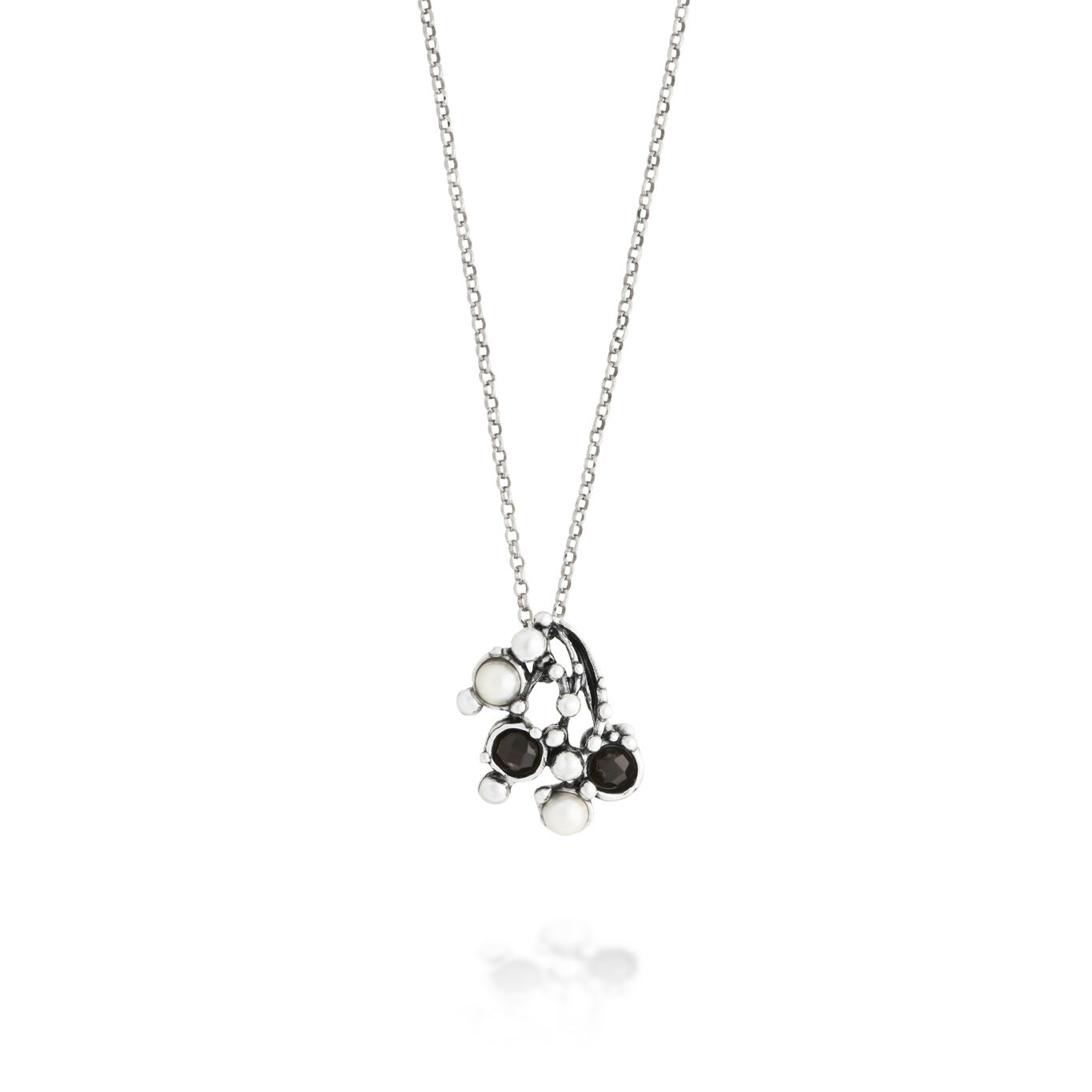
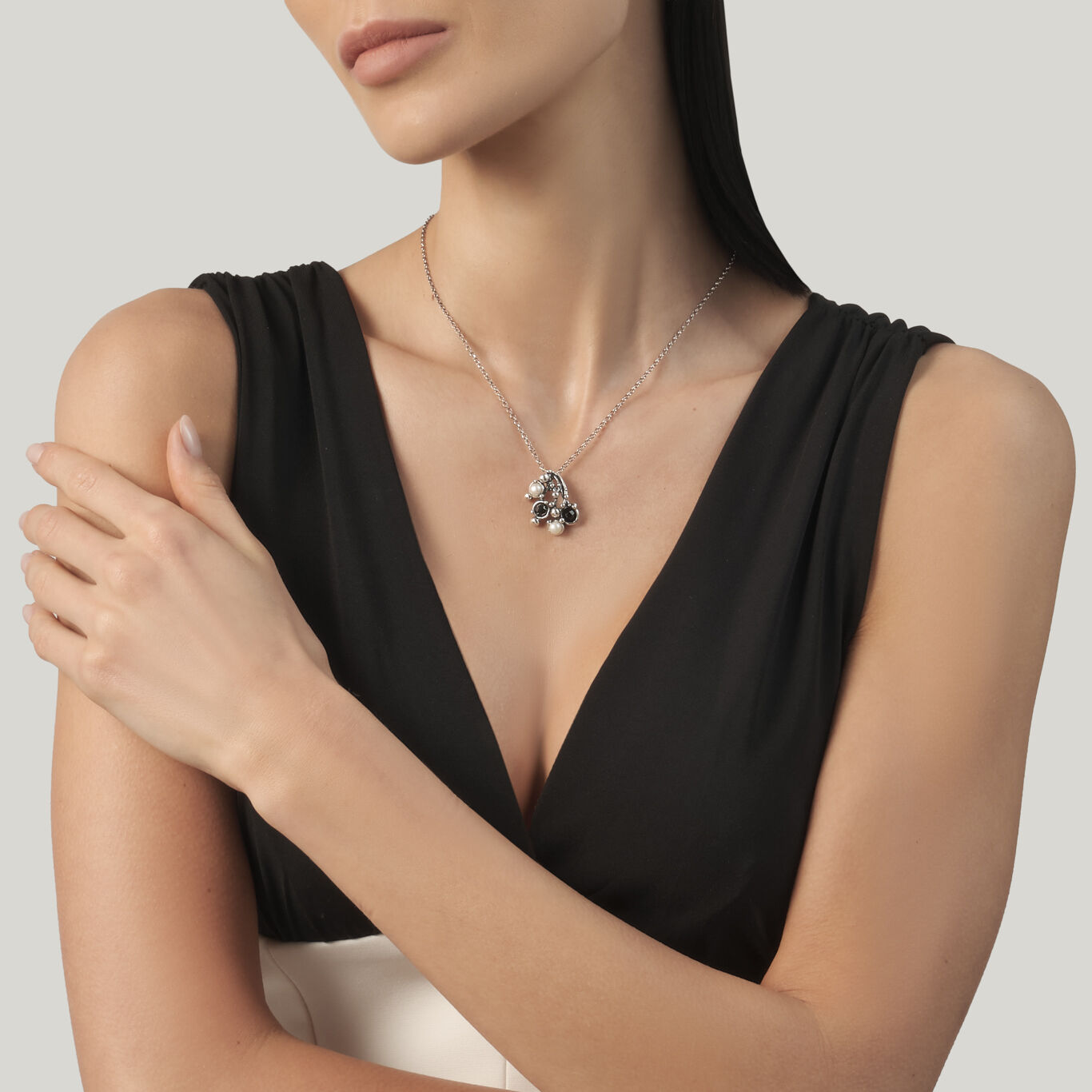
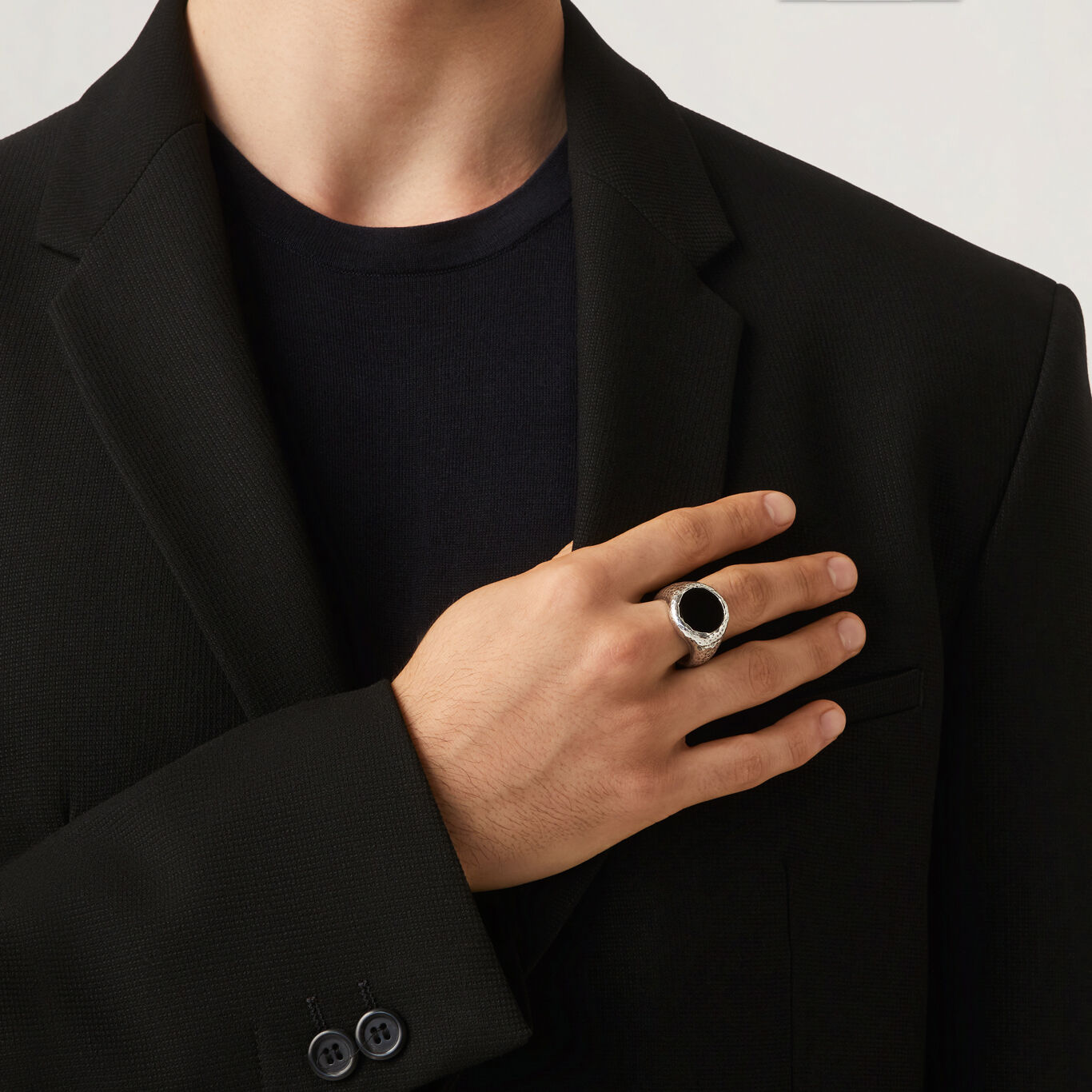
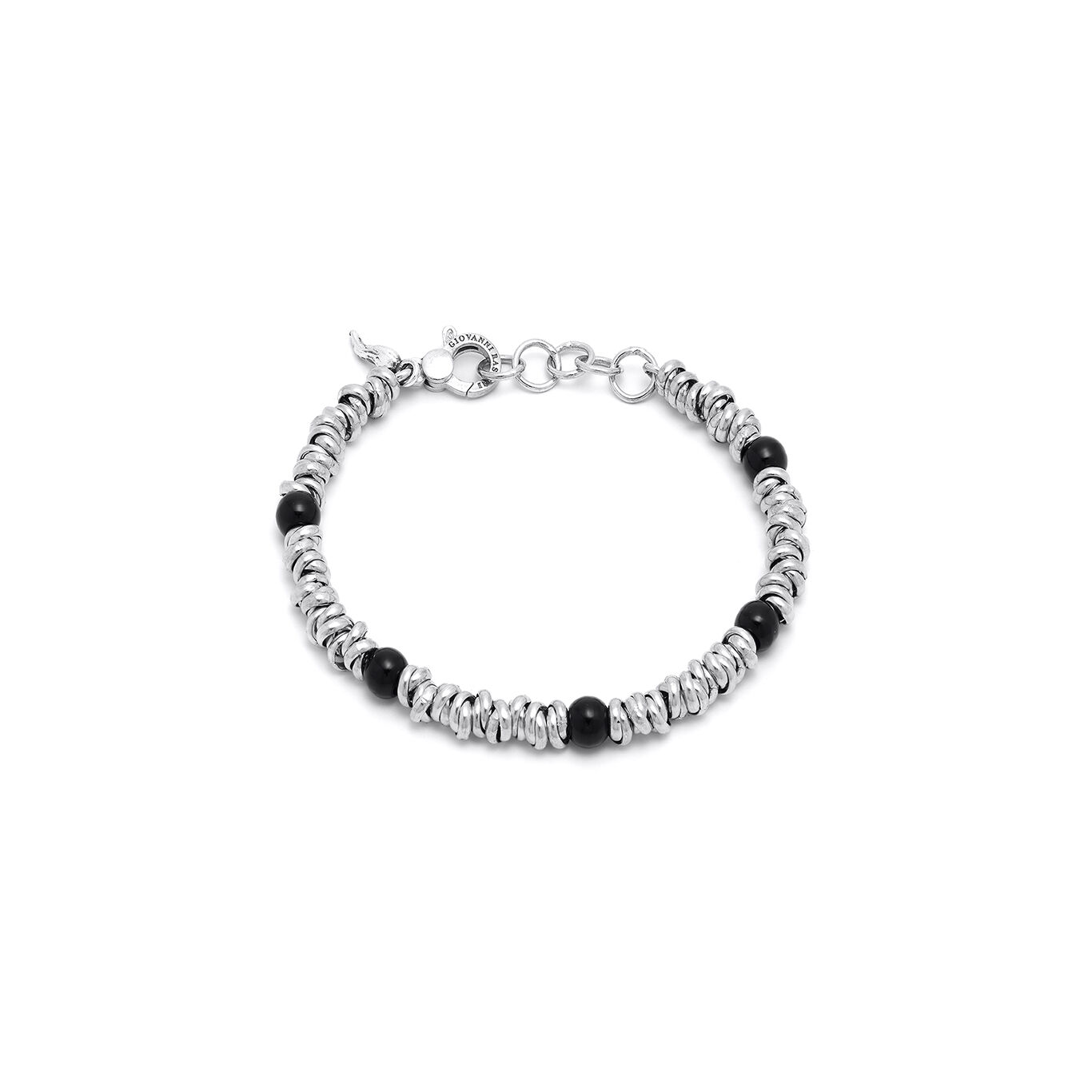
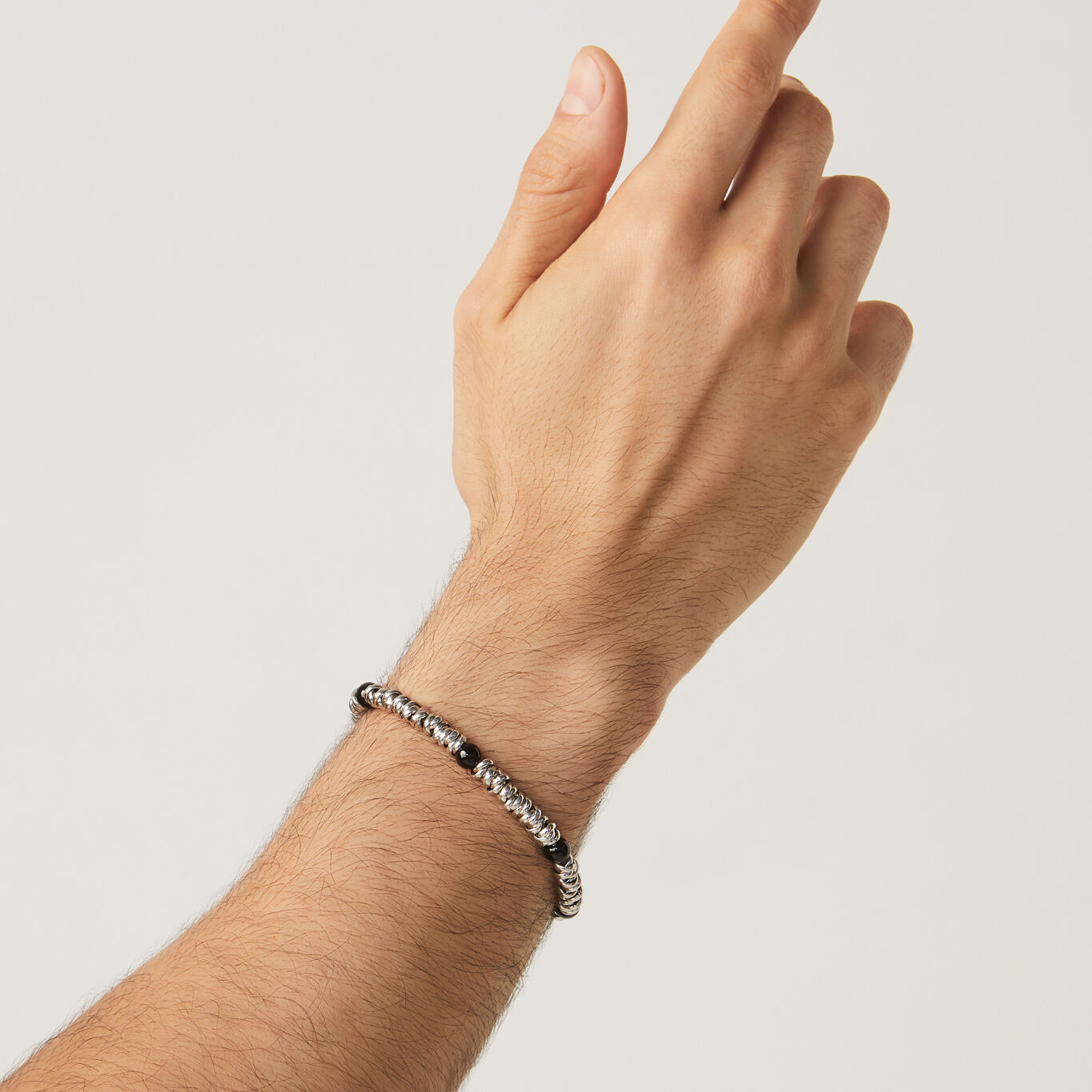
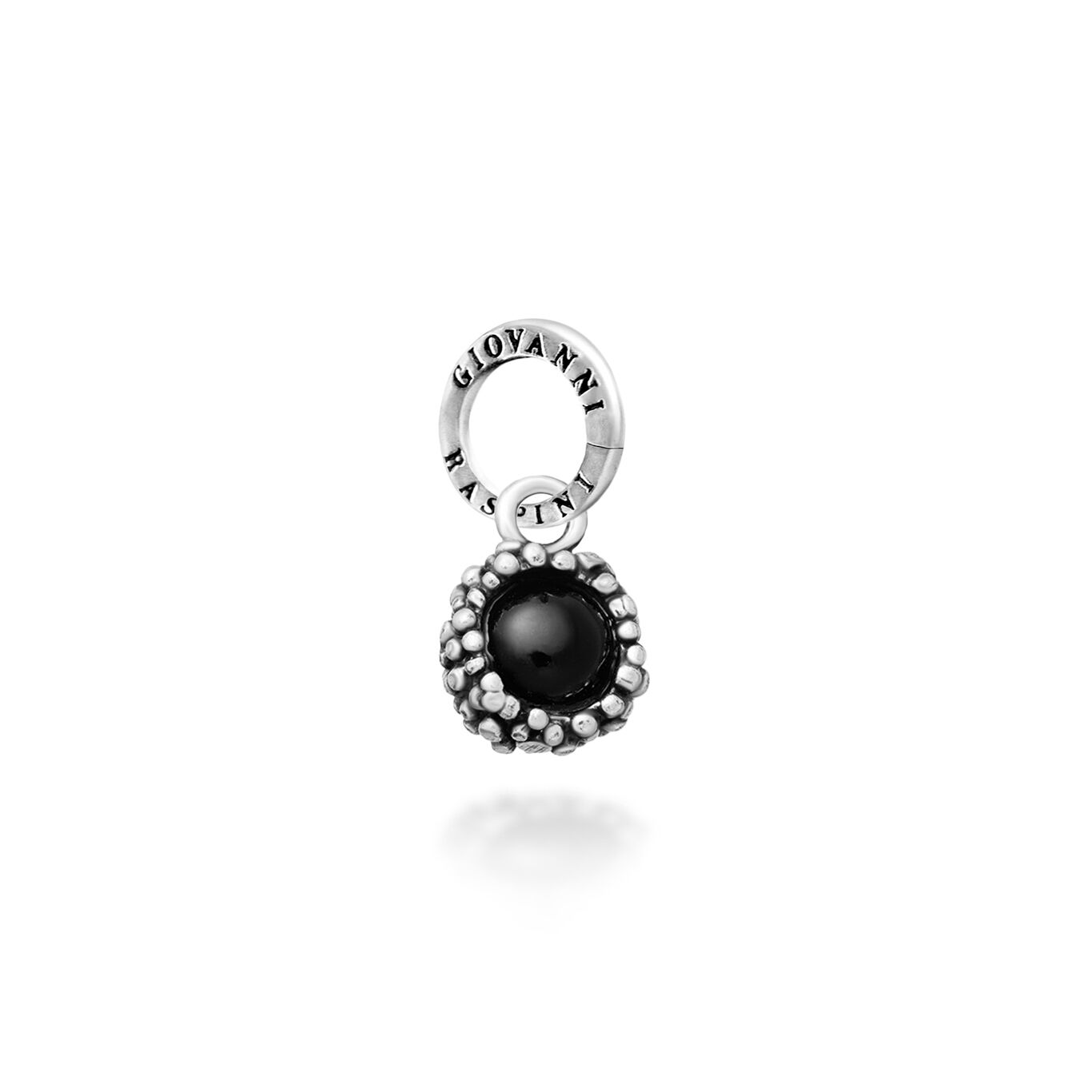
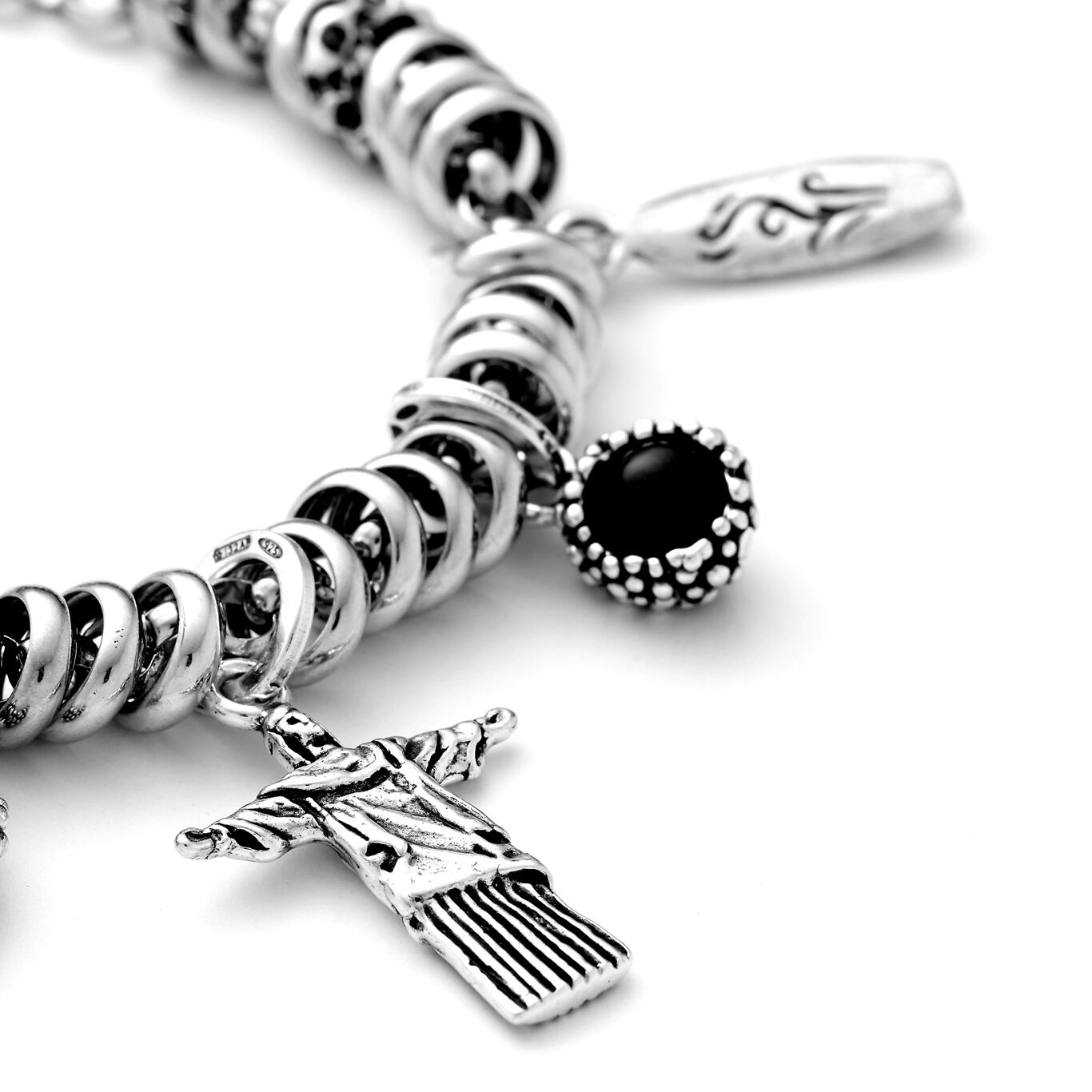
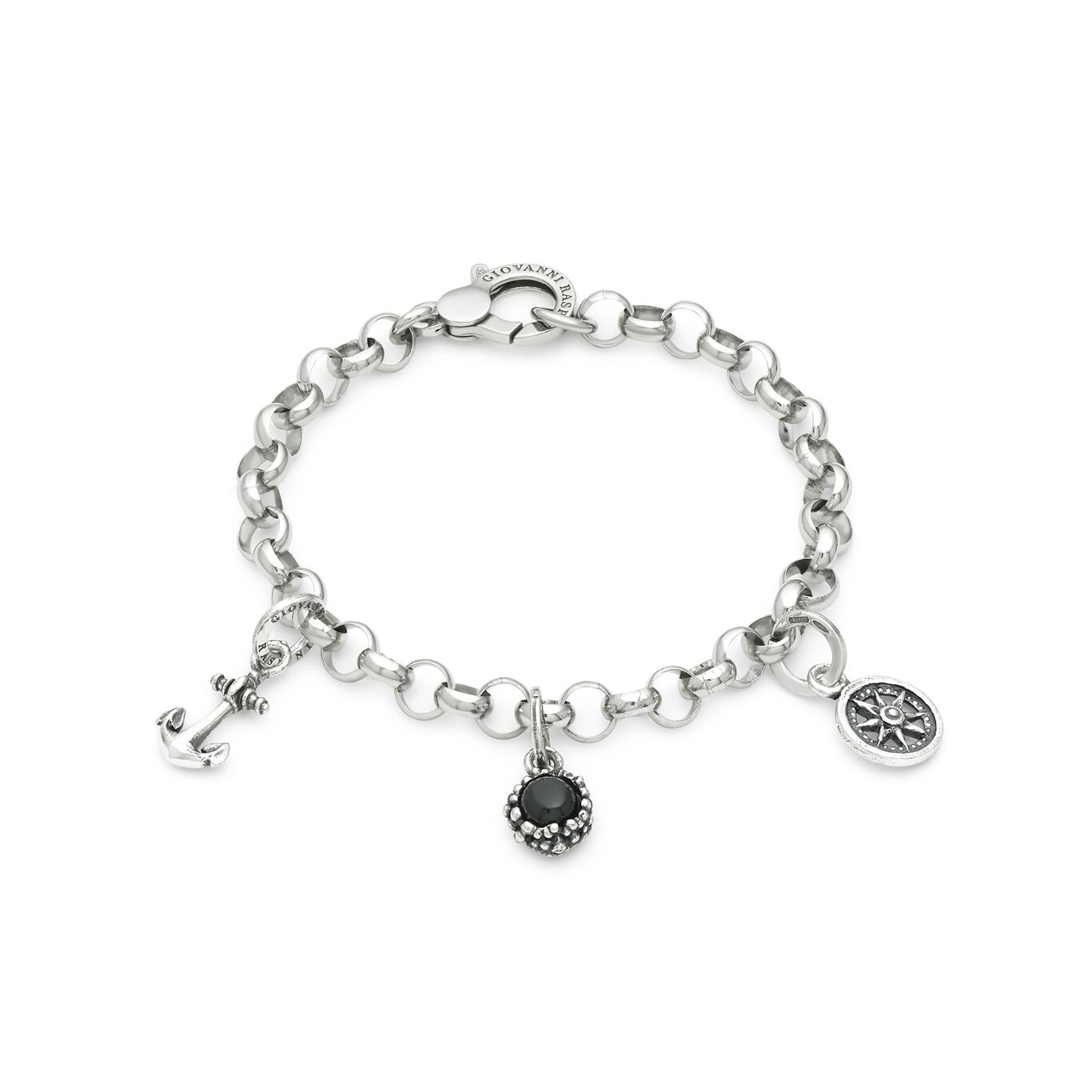
Onyx, especially in its black variant, is an extremely versatile and contemporary stone, ideal for enhancing both women's and men's jewellery. It pairs beautifully with hammered and burnished silver, which enhance its bold character and deep colour.
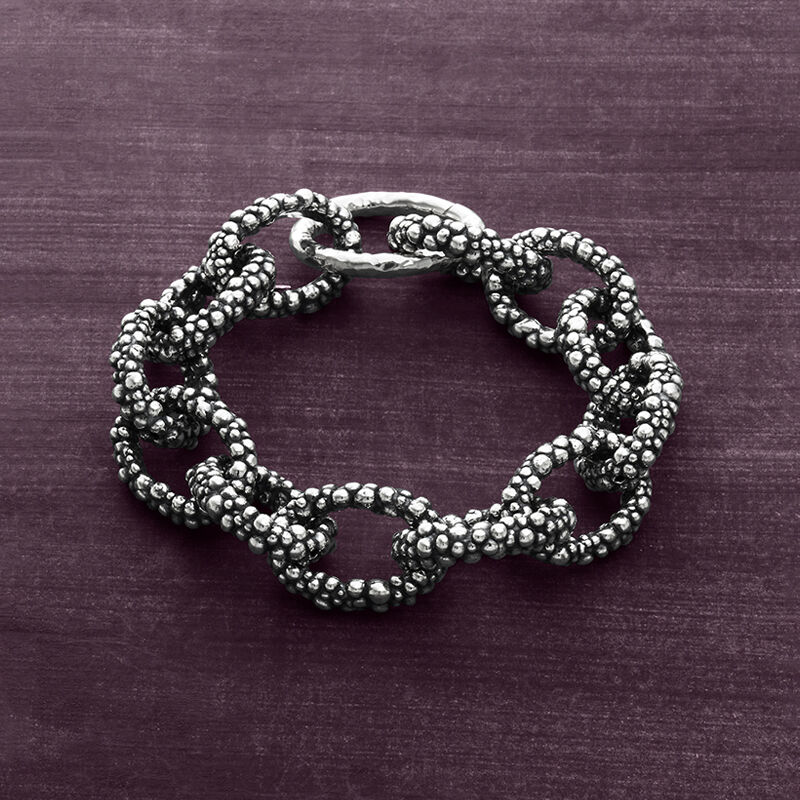
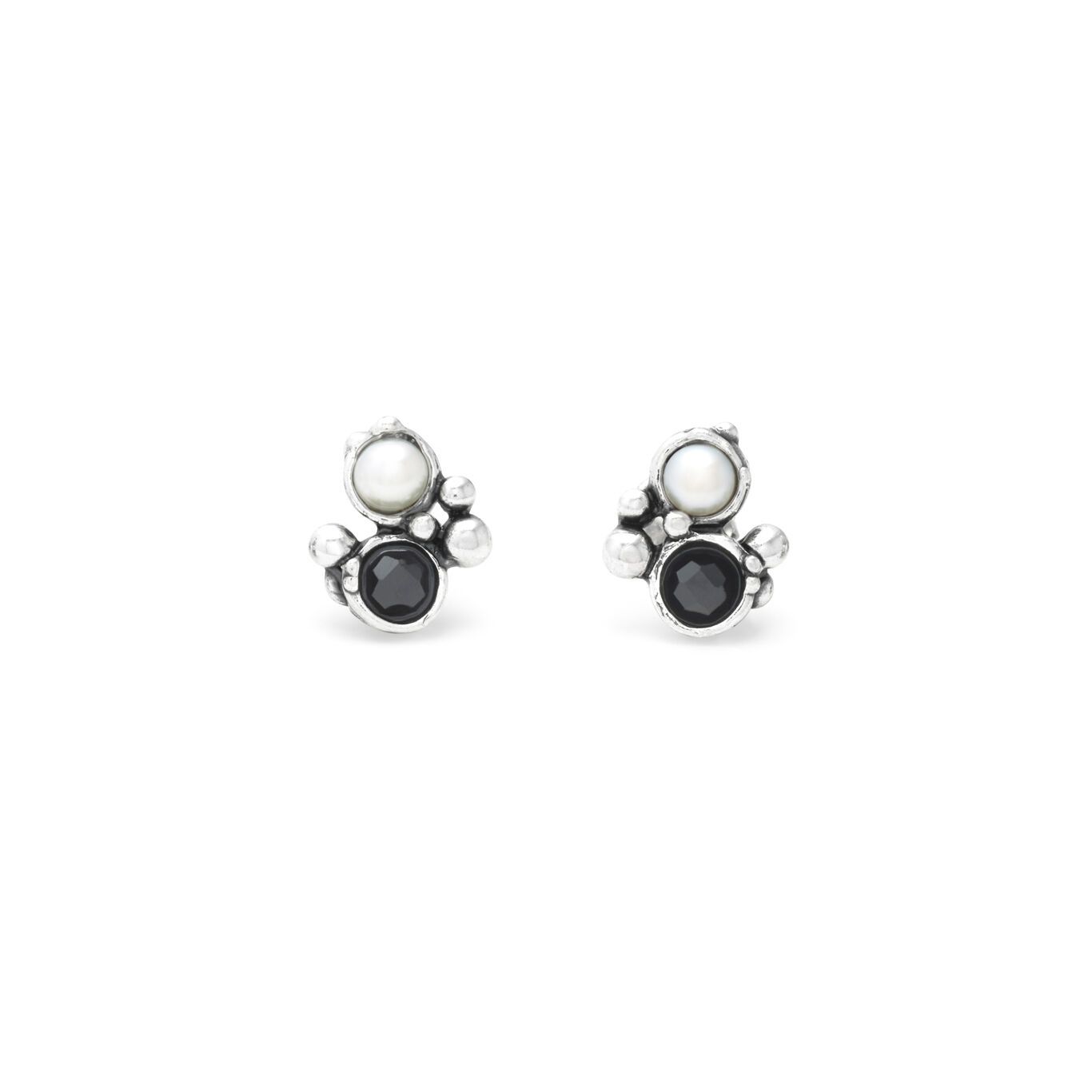
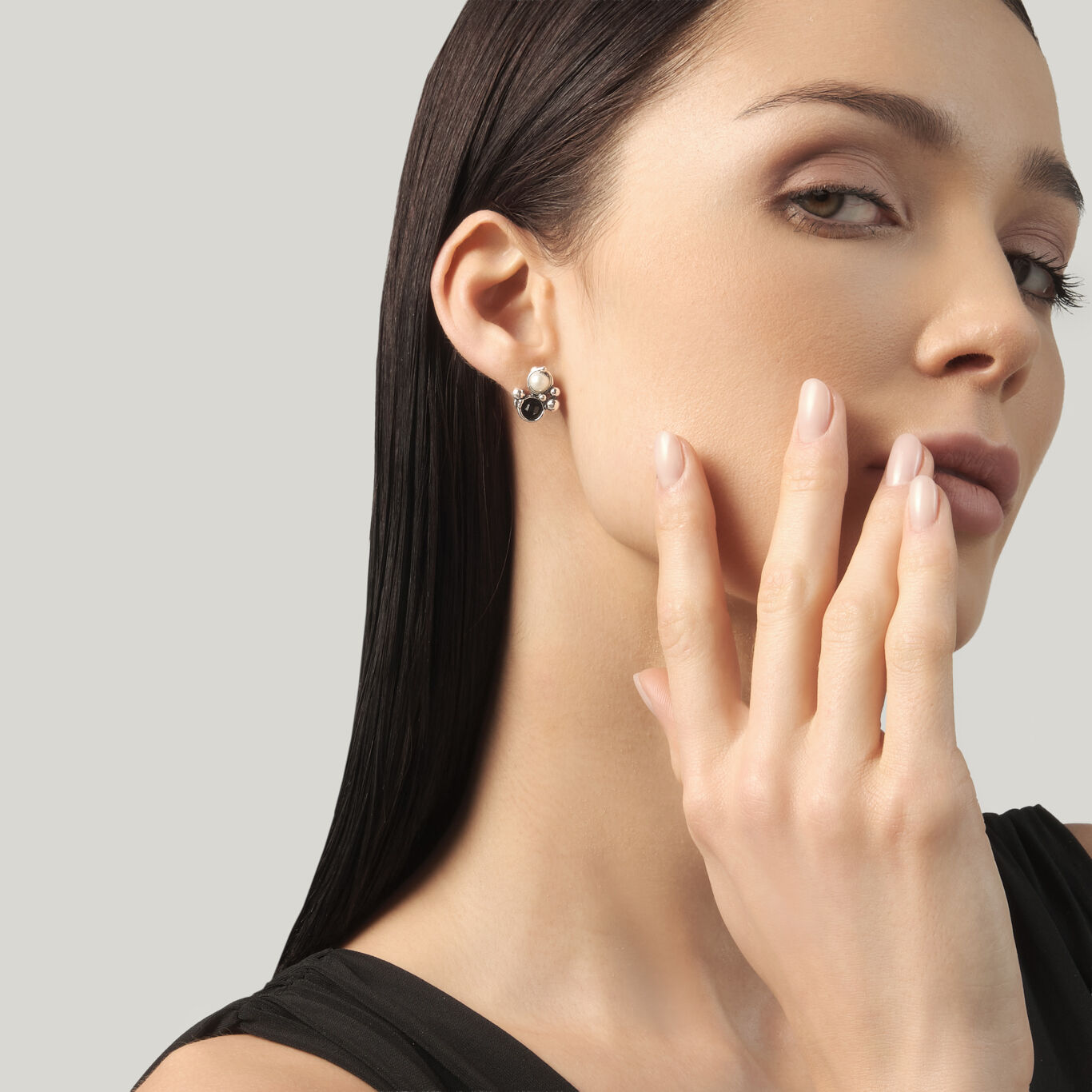
Onyx lends itself to particularly elegant bichromatic combinations, perfect for people who love contrasts. For example, black onyx spherules alternating with hammered silver elements, or small metal knots intertwined with dark spheres.
The lighter variants, such as white or green onyx, sing in a softer and more natural register, perfect for wearers who want to move away from the classic all-black while embracing the stone’s allure.
When to wear onyx: Black onyx lends itself beautifully to more formal and evening looks, while lighter shades naturally adapt to everyday and more informal ensembles.
All those who choose to wear onyx are revealing a small glimpse of their character, embracing a stone that wins hearts with its silent intensity.
Onyx: frequently asked questions
How should I clean and store a piece of onyx jewellery?
As it is a slightly porous stone, onyx should never be immersed in harsh chemical detergents or ultrasonic cleaners. For cleaning, only ever use a soft, damp cloth. Always store the piece of jewellery in its case, separated from other stones that could scratch the shiny surface.
Which zodiac signs is onyx associated with?
Black onyx is traditionally linked to the signs of Capricorn and Scorpio. It reflects the determination, rigour and deep willpower that characterise these signs, making it a perfect birthday gift for all those born in the winter months.
What meaning does a gift of onyx jewellery convey?
Giving an onyx ring, bracelet or pendant is the perfect way to recognise the recipient’s strength of mind. It is a gift that conveys power, elegance and protection.