Rock crystal jewellery: precious clarity
The rock crystal is one of nature’s most fascinating creations and a cornerstone of the world of jewellery. Celebrated for centuries as the very embodiment of purity, this transparent and colourless quartz has touched distant cultures and civilisations, from the temples of ancient Greece to Renaissance courts. Today, it has taken its rightful place as one of the most elegant and versatile protagonists of contemporary jewellery. This stone catches the light and returns it intact, with no distortion or shadows.


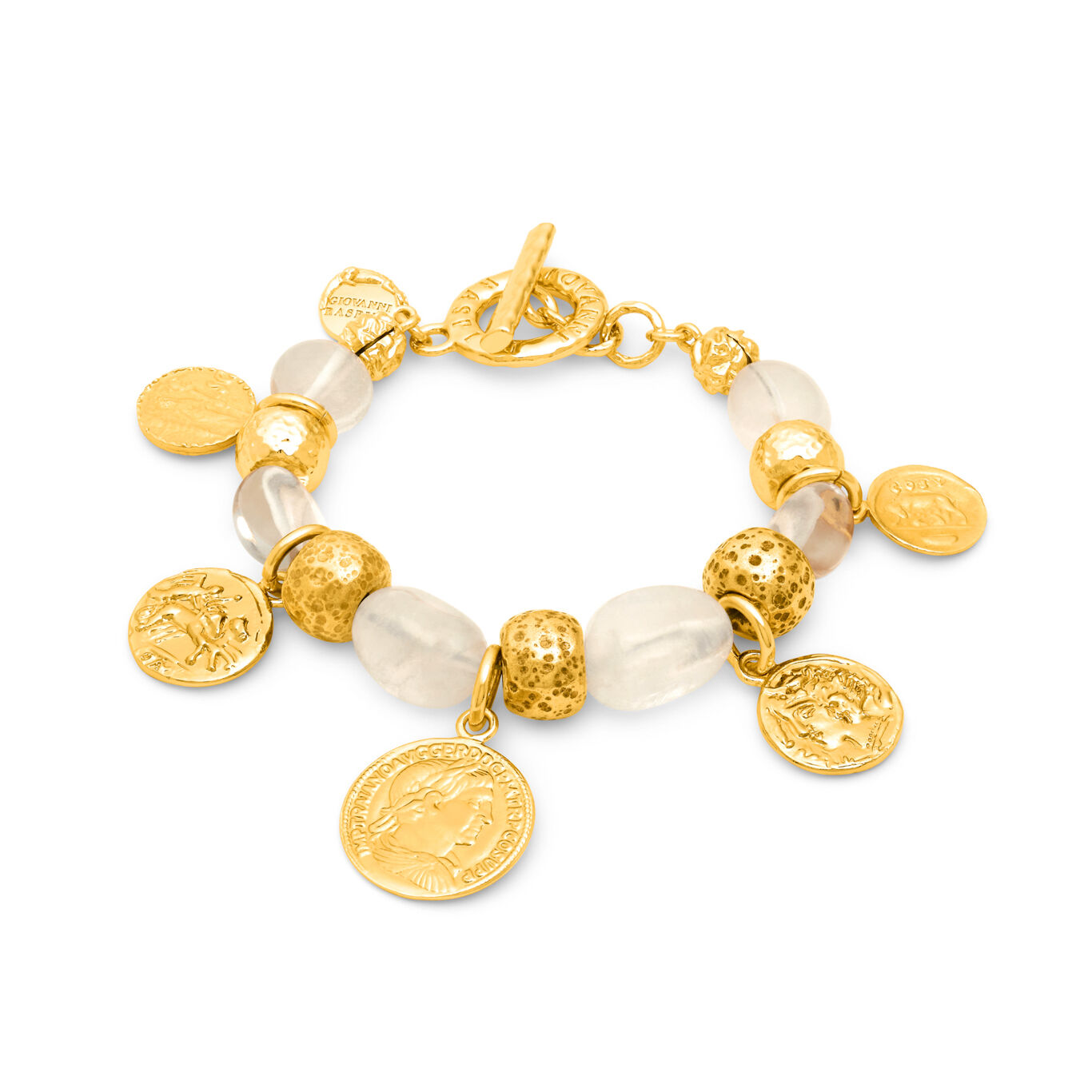
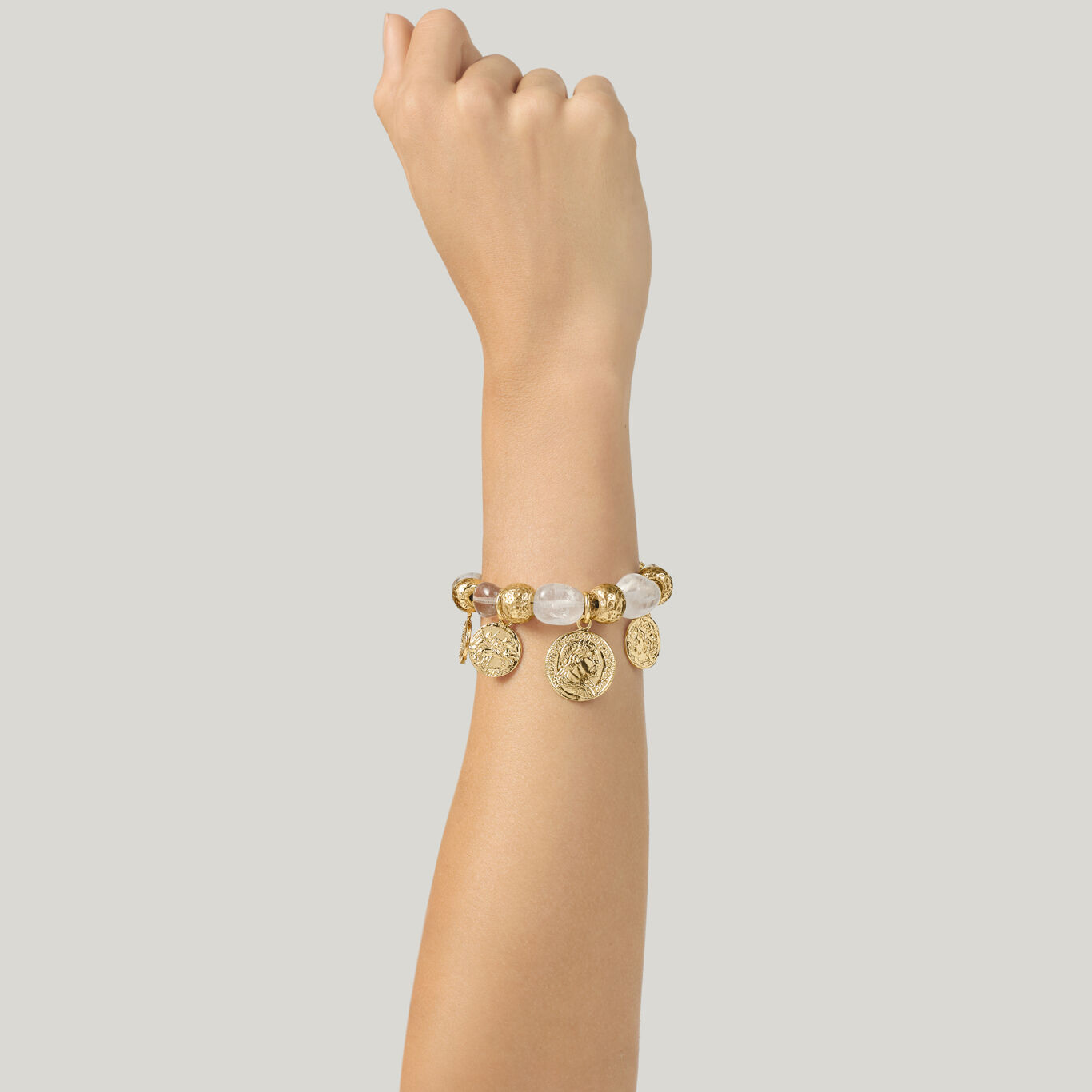
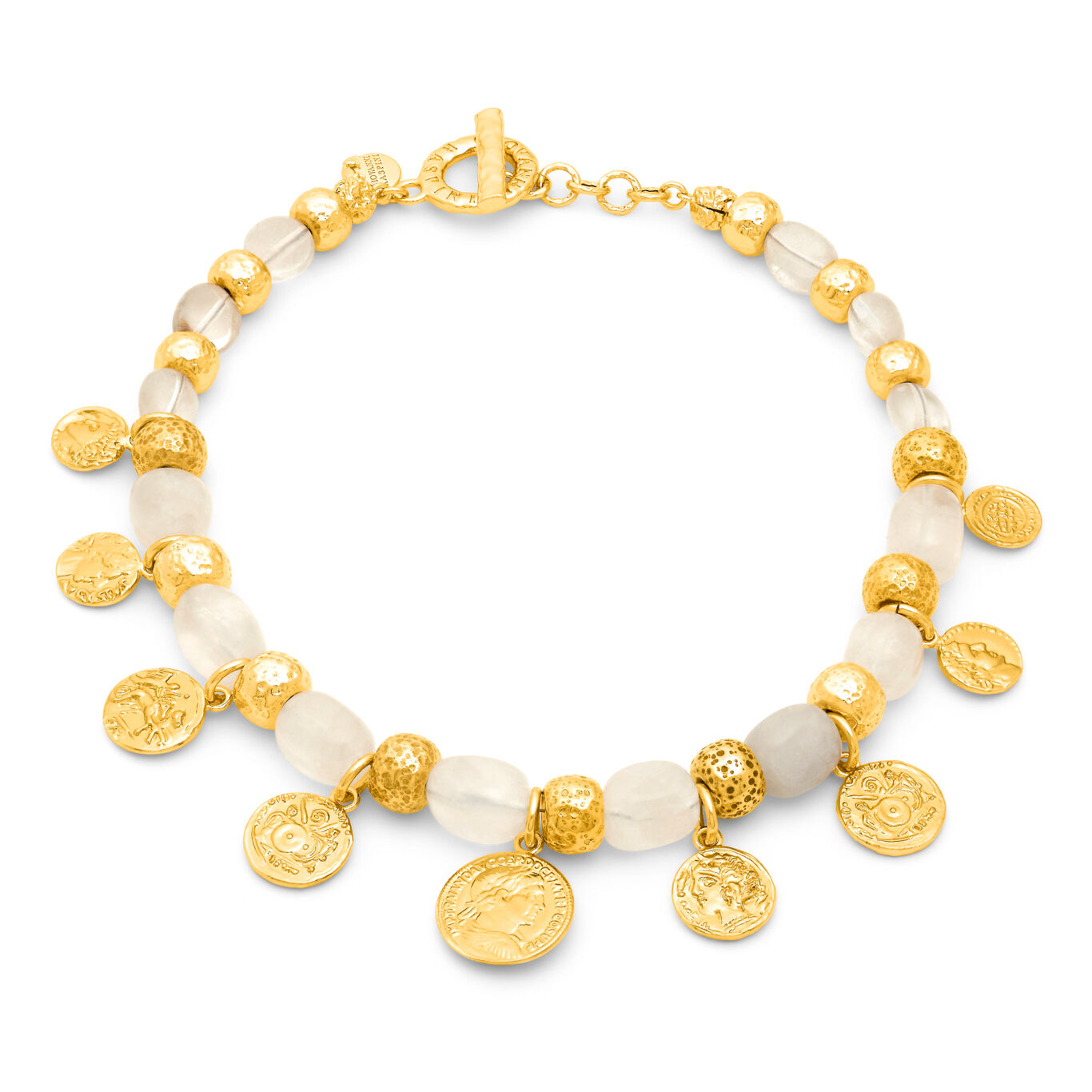
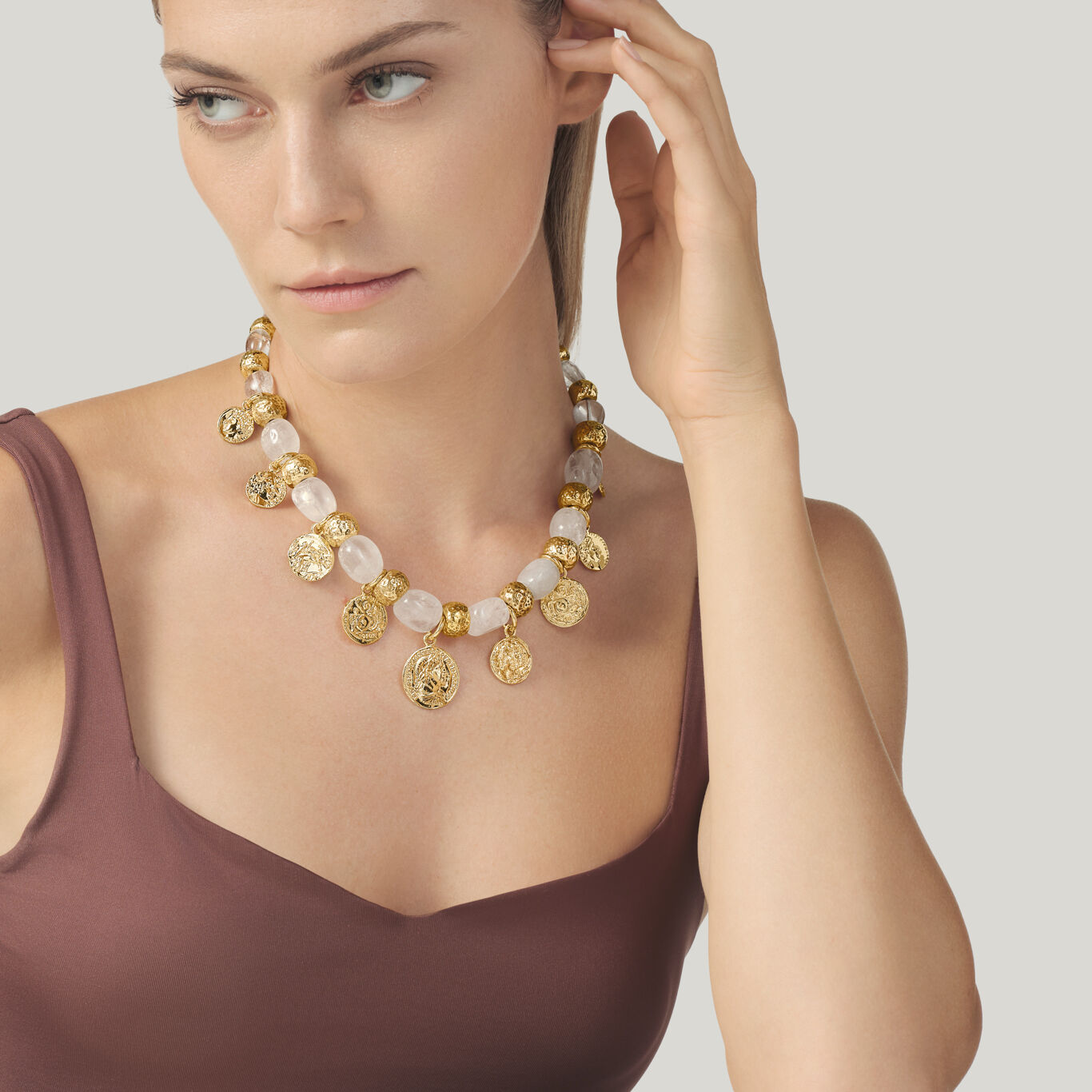
What is rock crystal and where is it formed?
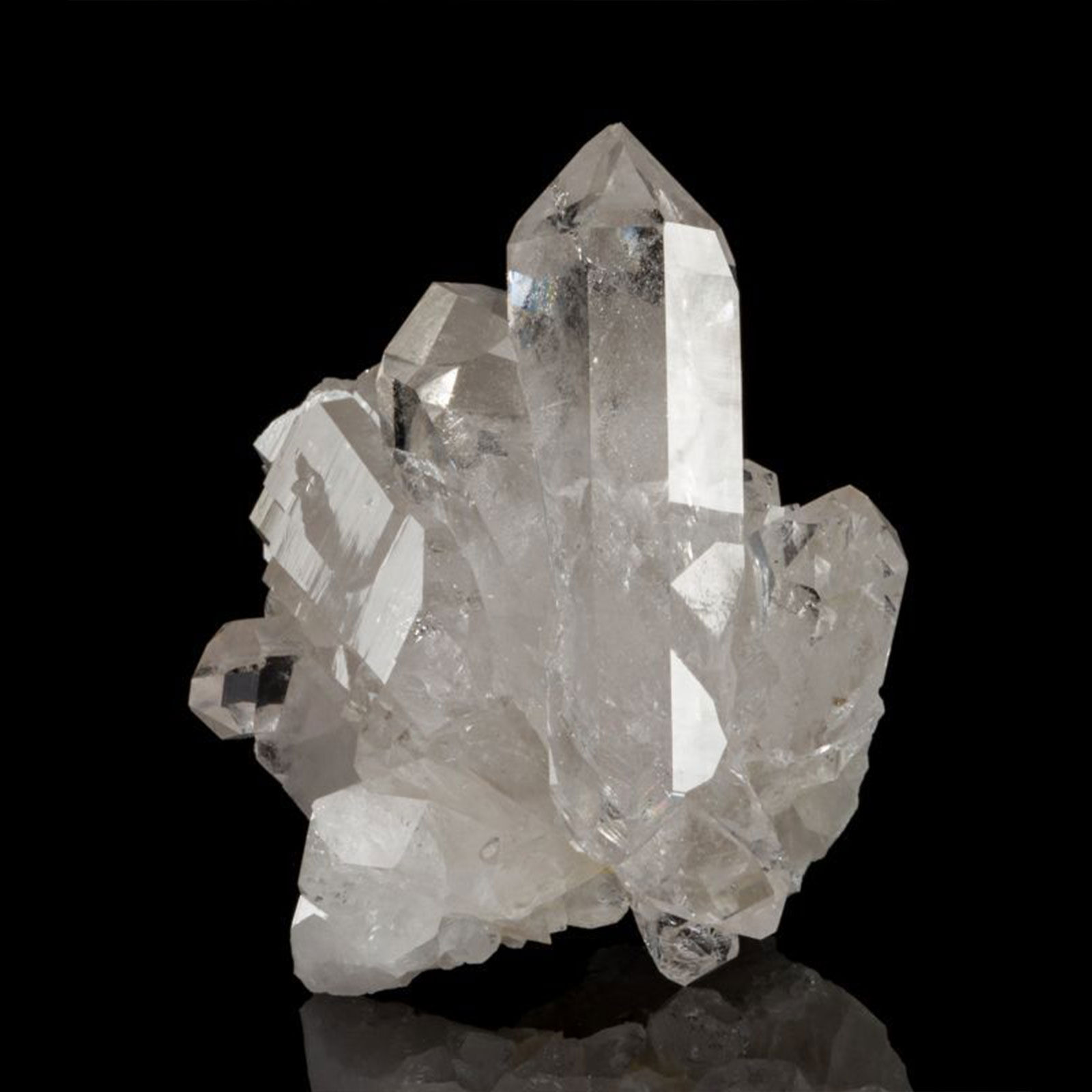
Rock crystal grows slowly within cavities and hydrothermal veins of igneous and metamorphic rocks, often at great depths, where its crystals are able to develop undisturbed with near-perfect regularity.
The most generous deposits are found in Brazil and Madagascar, but it also grows in the United States (Arkansas) and in numerous alpine regions. For centuries, "crystal hunters" have climbed the most rugged peaks in search of these transparent treasures, forging legends and honing a craft that has been handed down through the generations.
The so-called Herkimer diamonds are a particularly special form of quartz crystal, found in Herkimer County, New York. They grow free inside small rocky cavities, without ever anchoring to the parent rock, and therefore develop two natural points instead of one, with eighteen facets formed by geological pressure over millions of years. It is no coincidence that they are known as Herkimer diamonds: their extraordinary brilliance, obtained without any human intervention, is very reminiscent of real diamonds.
The physical and chemical properties of rock crystal (hyaline quartz)
Rock crystal, known in gemmology by the scientific name of hyaline quartz (from the Greek hyalos, meaning "glass" or "transparent"), is a macrocrystalline variety of quartz, set apart by its complete lack of impurities. This near-perfect chemical purity makes it remarkably clear, like water transformed into stone. It is not surprising that the word crystal itself is derived from the Greek krystallos, meaning "ice", because the ancient Greeks believed that this stone was water frozen for eternity by the gods.
The term "rock" was added later to highlight its natural geological origin, deep in the cliffs. It served to distinguish the authentic gem – painstakingly located and extracted from the alpine peaks – from common crystal, which refers to manmade glass enriched with lead oxide.
The chemical formula of rock crystal is SiO2, and it is rated 7 out of 10 on the Mohs scale of mineral hardness. These qualities make rock crystal durable and suitable for everyday use, although it should be handled with care, much like any precious jewel, and stored separately from harder stones (such as diamonds and sapphires) to prevent scratching.

Rock crystal in history and design: interpretations from past to present
Since ancient times, rock crystal has been associated with absolute purity: its transparency, capable of letting light pass through without casting a shadow, has always been a symbol of truth and clarity of mind. Ancient civilisations used it to make crystal balls and amulets, believing that its clear nature favoured spiritual communication and mental lucidity.
In medieval and Renaissance Europe, this stone was carved into precious chalices and court reliquaries, appreciated for its rarity and almost supernatural appearance.
Since the beginning of the twentieth century, rock crystal has been used extensively in luxury watchmaking, and in objects where transparency formed an integral and fundamental part of the design concept.

Rock crystal jewellery: how to choose and wear your perfect piece
Thanks to its total transparency, rock crystal is one of the most versatile stones in existence: it pairs beautifully with any metal, from polished silver to burnished silver, right through to gold.
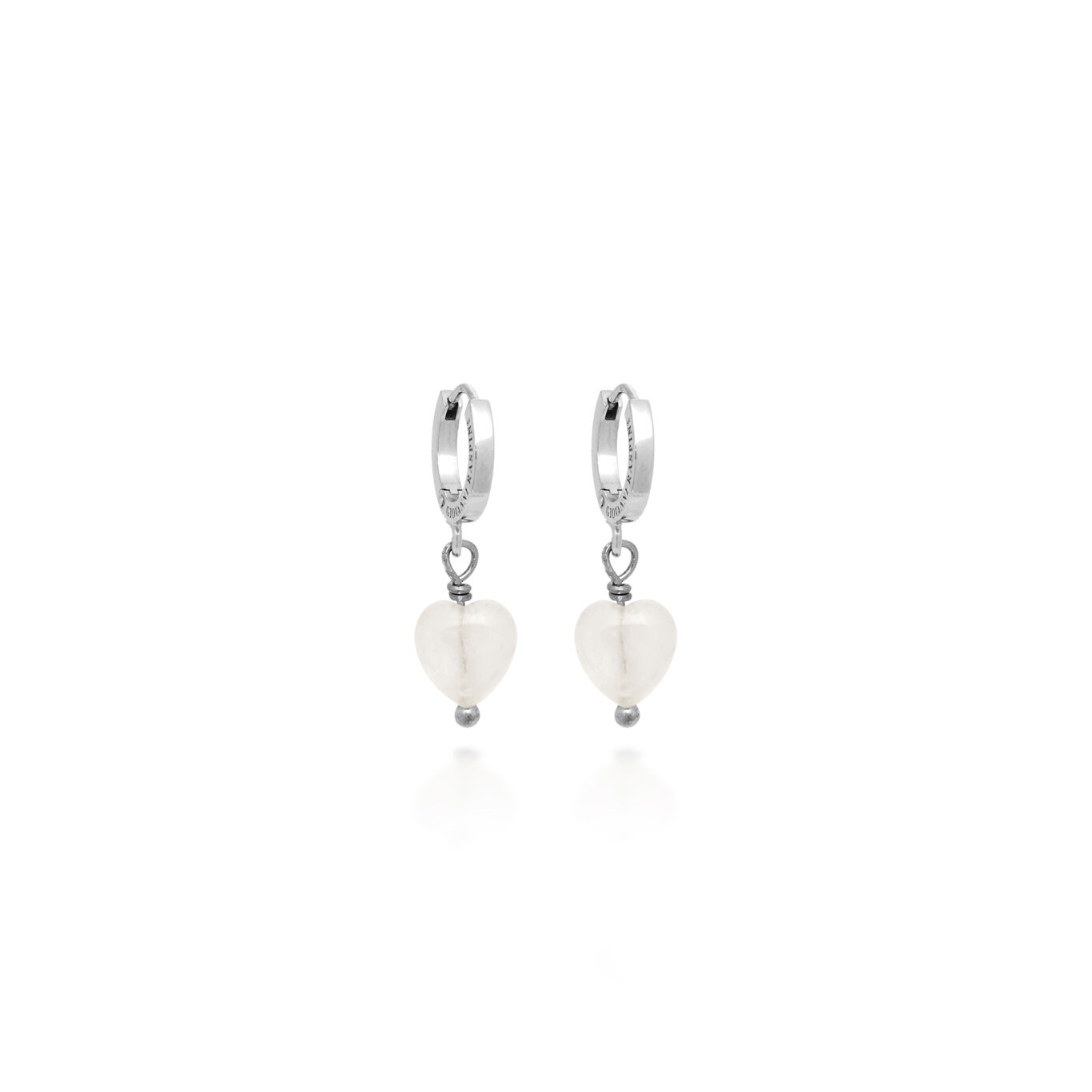
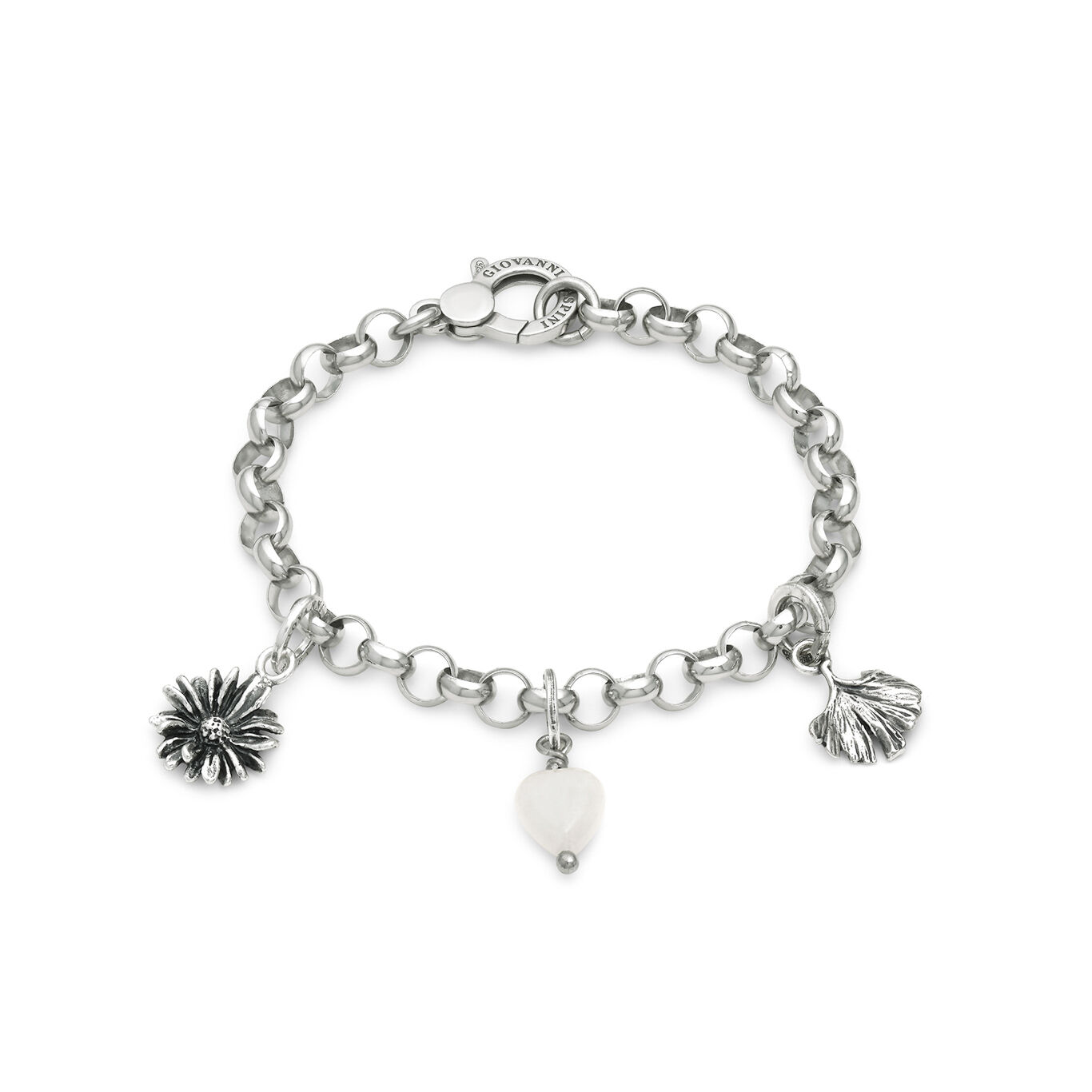
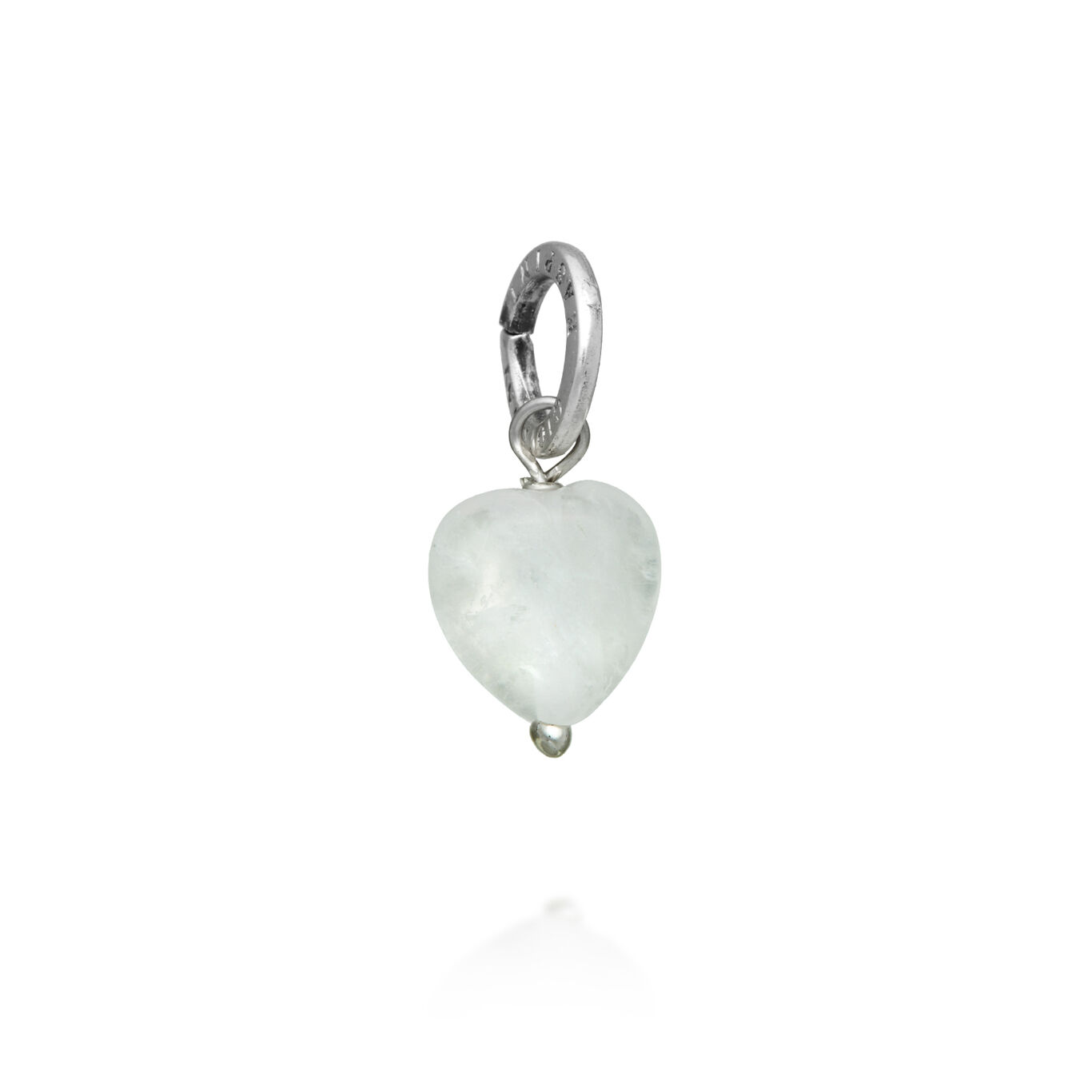
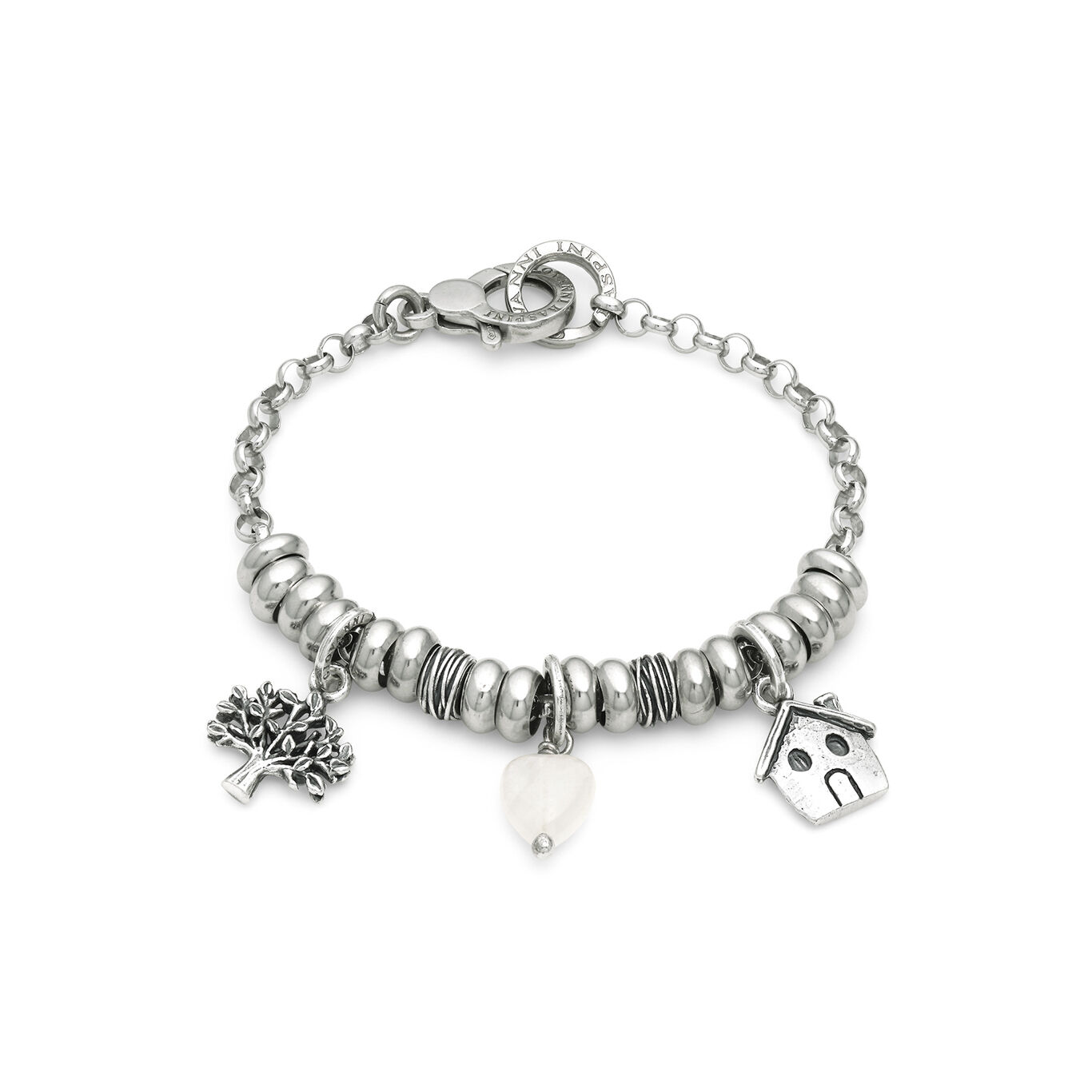
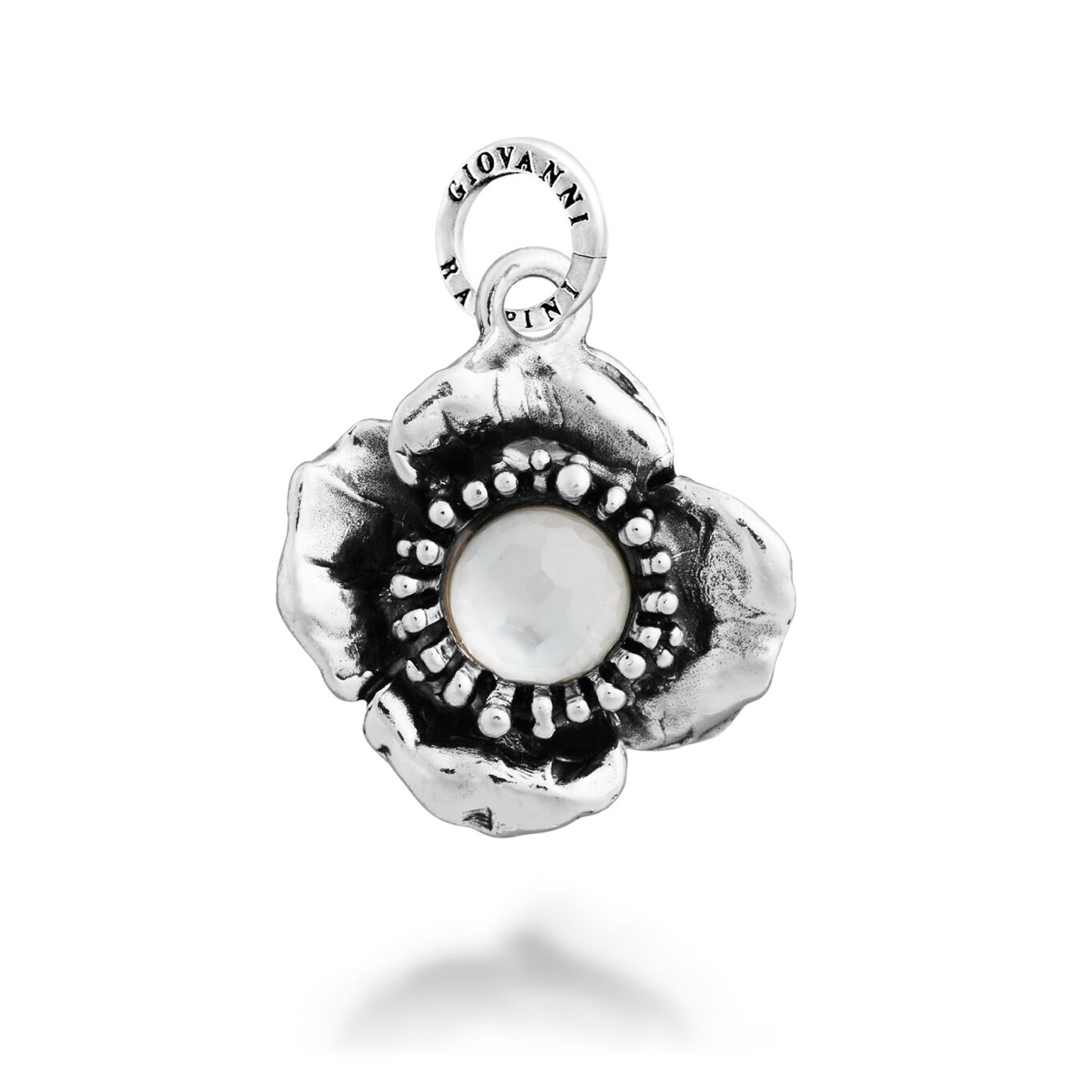
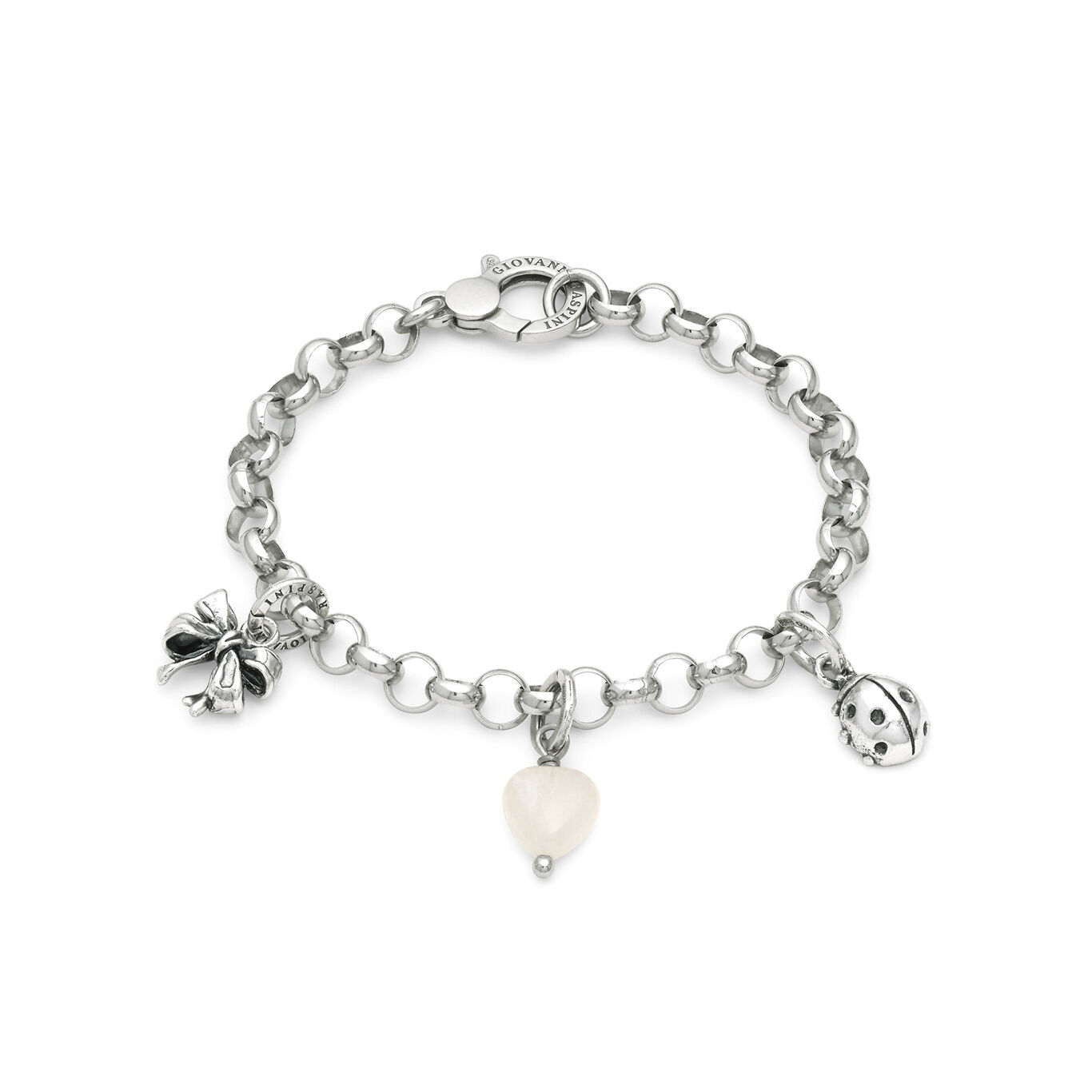
It is the ideal stone for people who love an understated and contemporary aesthetic: a pair of rock crystal earrings subtly frames the face in brightness, while a charm can add a small symbol of purity to customisable bracelets and necklaces.
As it is colourless, rock crystal also works wonderfully as a companion stone: alongside a colourful gem, such as amethyst, it harmoniously amplifies the other stone’s brightness, forming a frame of pure light.
A piece of jewellery with rock crystal adapts effortlessly to each season, moves seamlessly from day to night, and is the ideal choice for all those seeking a discreet yet dynamic flash of energy.
Rock crystal: frequently asked questions
Is rock crystal always colourless?
In its purest form, yes, but nature is full of surprises. Within the crystals, fascinating inclusions may form: thin golden needles of rutile within the famous rutilated quartz, feather-like forms and fine internal veils that create unique light effects, or very light smoky shades. Each specimen therefore boasts its own unique qualities.
How should I clean rock crystal jewellery?
To maintain the transparency of the rock crystal, simply immerse the piece of jewellery in lukewarm water with a small drop of neutral soap, then gently brush it with a soft-bristled toothbrush. Gently dry it with a microfibre cloth to avoid streaks.
When should I give rock crystal jewellery as a gift?
Representing purity and clarity, rock crystal makes the ideal gift to celebrate new beginnings, such as a graduation, a new career path or an important anniversary. This stone conveys a message of clear and lasting affection.
What is the difference between rock crystal and zircon?
While zircon is often created in the lab to mimic diamond, with strong rainbow refraction, rock crystal is 100% natural quartz. It offers a discreet and elegant brightness, infusing each piece of jewellery with a tactile allure.